


Just over a year ago, I recorded the first episode of Millennial Masters. After fifteen years working behind the scenes, it felt like stepping into a different role, with all the discomfort that comes with it.
I started before I felt ready, because the only way to test the idea was to publish it.
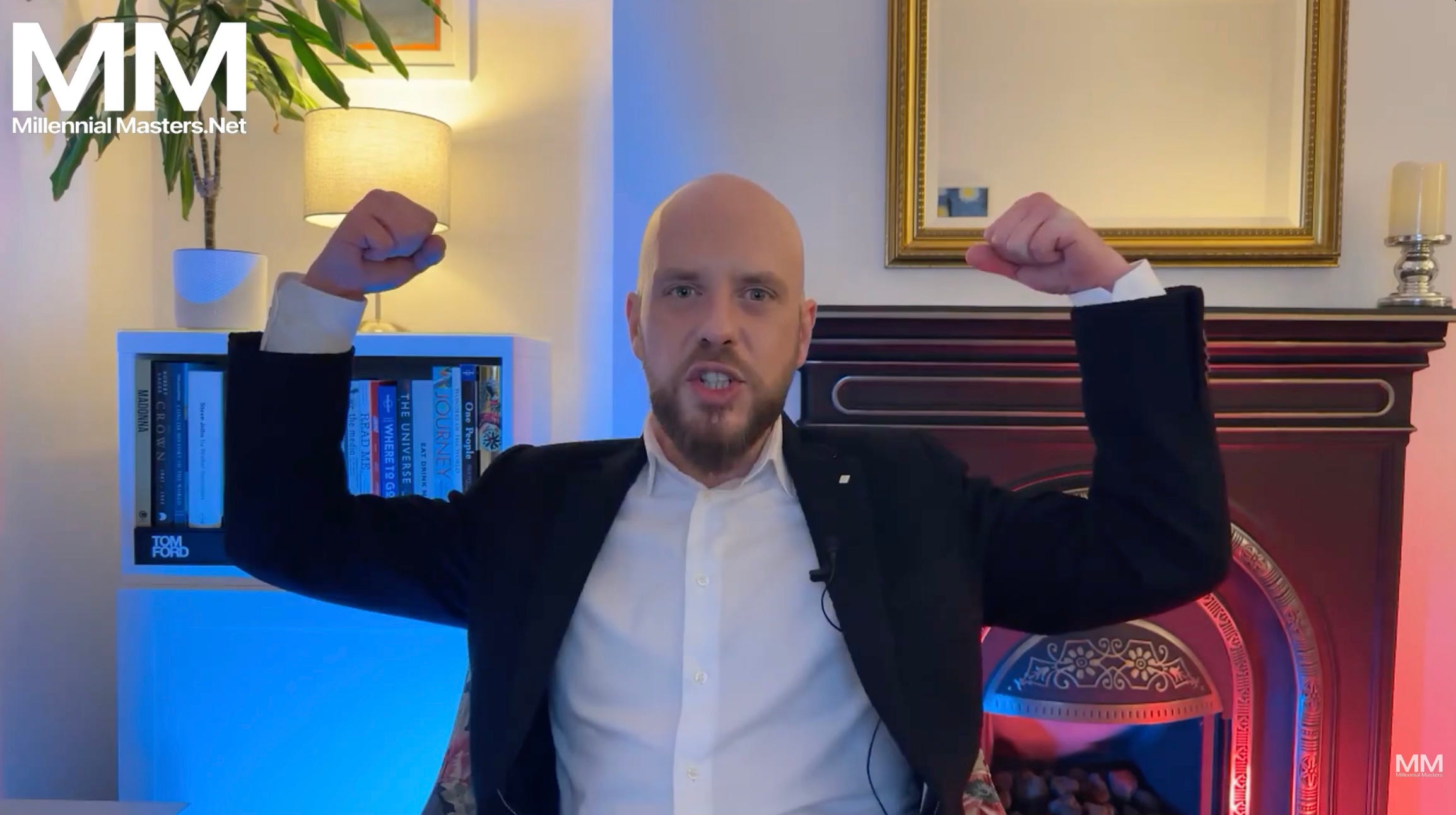
Since then, fifty-two episodes have turned into a real body of work. The YouTube channel has reached 27,000 subscribers. The newsletter has grown to more than 5,600. Each week, more than 32,000 people now tune in for unvarnished founder conversations, told while the work is still happening.
Before I publish the next run of episodes, I wanted to take stock of what this year actually produced. Metrics are useful, but they are rarely the point. The point is what you learn when you listen back carefully.
When I revisited the conversations, a pattern became hard to ignore. Founders describe pressure in surprisingly similar terms. They return to the same decisions, even when their industries differ. They are frank about uncertainty in a way that is rare in public settings.
That is what I want to hold onto. What follows are the 25 lessons that stayed with me, and that I intend to carry into the next year. 👇🏻
1️⃣ Your inner operating system
Build fitness into your focus
Many think fitness is all about aesthetics. But the people I interviewed described it as something closer to medicine. Regular training clears the noise, steadies emotions, and creates the headroom you need when everything else is unpredictable. It’s about keeping your mind in a place where you can think clearly and lead without spiralling. Most of the founders who stay calm under pressure have some kind of physical anchor in their routine.
“Fitness is saving my life because it mentally calms me.” – Francesca McClory
Use structure to protect your time
Every founder battles interruptions. Structure forces the day to serve your priorities rather than the other way around. Blocking hours for strategy, deep work, or outreach isn’t rigid. It’s what keeps your attention from being eaten by noise. Several guests described this as the moment their output doubled. Clarity comes from defining when you think, not just what you think about.
“Structure creates efficiency. And by having structure, you can be more efficient.” – Will Polston

Steal the shortcuts from people ahead of you
Many guests talked about the years they wasted figuring things out alone. The consistent pattern was learning faster by studying people ahead of them. Not copying, but compressing the timeline by understanding which mistakes are optional. Founders who rise quickly build a habit of seeking reference points. They want the shortcuts that experience can give without waiting a decade to earn them.
“Probably could have reduced 10 years of work into like three years probably.” – Jack Good
Keep a habit of honest self-reflection
The founders who move forward fastest are deliberate about how they think. They reflect without punishing themselves and treat reflection as a calibration tool. Daily journaling, end-of-week reviews, voice notes, or short meditations all came up in interviews. It’s how they spot patterns in their reactions and improve their judgement.
“Self-reflection is key. I really think a lot about how I handle situations, how I can better do things next time, but I don’t beat myself up.” – Gemma Price
2️⃣ How you actually make progress
Start with the smallest real version
Action came up more than ambition. The founders who build momentum don’t wait for a perfect plan. They move now, even if the first version looks scrappy. The earliest version is the diagnostic tool. It tells you what matters and what doesn’t. It’s how you find truth quickly.
“What is the minimum viable version? Up front we call it skateboards.” – Lauren Currie
Consolidate ideas before overwhelming your team
Many founders drown their own teams in half-formed ideas. The strongest operators filter their thoughts before sharing them. They sit with ideas for a few days, test assumptions, and only escalate the ones worth executing. It protects the team’s capacity and sharpens leadership.
“Founders need to stop caring about ideas, right? Like frankly, no business fails because there’s not enough ideas.” – Harry Sanders
Let feedback steer your direction
Starting creates movement, which creates information. That information tells you where to go next. The founders who scale quickly treat feedback as insight. They listen to customers without defensiveness and treat every early conversation as data.
“The reality is the best thing you can do is just start. And through the process of starting, you get feedback. Feedback is insight.” – Oliver Yonchev
Test ideas by trying to disprove them
When you want something to be right, you hear what you want to hear. The sharpest founders avoid this trap by trying to disprove their own ideas. They ask harder questions, and seek critics, not cheerleaders. It prevents expensive detours.
“If you’re going out to prove to yourself that it’s a great idea, you will spin stuff. You will ask the wrong questions and you will paint too much of a rosy picture for yourself.” – Nick Telson-Sillett
Let the market define success
Team size, office space, brand perception. None of it matters as much as customers paying. The cleanest signal of product value is money. Founders who stay focused on this move faster and waste less.
“People giving you money for your product is the ultimate validation that you are doing something useful.” – Thibault Louis-Lucas
3️⃣ How you show up
Repetition builds trust
You don’t earn trust through novelty, but through consistency. Most founders underestimate how often a message must be heard before it sticks. The strongest brands repeat the same truth until the audience can say it back to them.
“The best way to build trust is to say the same thing over and over, over, over again.” – Jason Graystone
Lead with value before you ask for attention
Almost every strong marketer on the show said the same thing. Give something useful before you ask for anything back. People follow those who help them first. It also reduces friction in sales because the relationship starts warm.
“Always provide value upfront, wherever you can. That’s how you’re going to get attention.” – Brad Mac
Keep language simple
Complex ideas don’t need complex words. The best communicators strip everything back. They want clarity, not cleverness. If a 15-year-old wouldn’t understand it, it probably needs rewriting.
“The language you use to explain your concepts should never be complex.” – Andrea Pacini
4️⃣ The harder parts of the journey
Treat mistakes as materials for growth
Every founder said some version of this. Mistakes aren’t moral failures, they’re inputs. But only if you capture them. Writing them down forces you to learn instead of repeating them.
“It has to be a lesson… let’s keep prepping for that future me that’s always trying to learn.” – Dumi Siwo
Build a runway that lets you breathe
A long cash buffer gives you control. It makes hard periods survivable and protects the quality of your decisions. Many guests said they wish they’d built it sooner.
“I did build in my first two years, sort of like a long cash run in the business so I could get more comfortable with [bad times].” – Joe Averill
Use your early years for bold risks
Before responsibilities stack up, you have the freedom to swing bigger. Several founders said their biggest regrets were the risks they avoided, not the ones they took.
“What’s the worst thing that’s gonna happen? You go back to your job.” – Peter Watson
Accept the irrationality of entrepreneurship
Starting a business rarely makes sense on paper. It requires irrational belief. The people who make it work stay committed despite the odds, not because of them.
“Launching a startup is never the sensible choice. It’s not based on facts. Everybody thinks they’re going to be the one in a million person that pulls it off.” – Andrew Steele
Move even when uncertainty stays high
Founders often wait for clarity that never arrives. The uncertainty is permanent. Learning to act inside it is the advantage.
“The level of uncertainty that you have is not going to go away. You continuously have uncertainty and you’re continuously outside of your comfort zone.” – Kevin de Patoul
Build resilience through repetition
Real resilience comes from the cycle of setback and recovery. There’s no secret technique, only practice.
“The only way to build resilience is to get knocked down and get back up way more times you got knocked down.” – Carly Meyers
5️⃣ People and power
Hire people sharper than you
Delegation is only powerful if the person truly elevates the work. Your job is to find specialists who can outperform you in the areas that matter.
“The role of an entrepreneur is finding people that are smarter than you. That’s it. That’s your role.” – Gus van Rijckevorsel
Hire for problems, not positions
Several founders avoid generic job descriptions. They define the problem they need solved and hire someone who can own it from day one.
“Rather than hiring a position I’m hiring a problem. I’m hiring for a problem, hiring a solution.” – Kamal Ellis-Hyman
Document everything to scale
Documentation sounds slow until you realise it’s the only way to scale without chaos. It sets standards, reduces onboarding drag, and lets AI handle repetitive work.
“Working in writing a lot is critical to that. There’s also… write, document and create artifacts.” – Nick Holzherr
Protect culture at all costs
Technical ability never outweighs attitude. A toxic hire erodes everything you’re trying to build. People with the wrong energy cost more than they contribute.
“If their attitude stinks and they’re bringing toxic behaviours, again, that’s never gonna work.” – Francesca McClory
Lead by giving first
Relationships deepen when you help before you ask. Founders who build strong networks make generosity a habit. It comes back later in ways you can’t predict.
“I generally don’t need anything from anyone… it doesn’t cost me anything to give it… you put enough karma out into the world.” – William Stokes
Use AI to scale the previously unscalable
AI isn’t a gimmick, but a force multiplier. It turns manual bottlenecks into scalable workflows and frees founders to focus on judgement and creativity.
“AI makes the unscalable scalable.” – Oliver Yonchev
Act fast on red flags
Small issues never stay small. Founders who protect their time and culture confront problems early. It prevents long, expensive messes later.
“Every time I see something going wrong, it’s just getting worse and worse.” – Thibault Louis-Lucas
A year in, and still the beginning
A year of Millennial Masters feels both tiny and significant. Fifty-two episodes in, and I’m more certain than ever that founders don’t need more theory. They need stories from people who’ve lived the pressure, made the decisions, and carried the consequences. That’s what this project has become. A place where those conversations land.
This community now sits at more than 32,000 across YouTube and the newsletter, and it works because you keep showing up with the same curiosity the guests bring. Every lesson in this edition came from someone who told the truth about their journey. I’m grateful for that honesty, and for the room you’ve all helped build around it.
These conversations changed how I think about ambition, risk, and the weight founders carry quietly. If even one of these lessons steadies your decisions in the weeks ahead, this work is doing what it should.
We’re still early. The next batch of episodes will go deeper, ask better questions, and tell the kinds of stories that stay useful long after the episode ends.
If something in here helped you, pass it on to someone building their own thing. The right lesson on the right day can shift everything.
PS: If you’ve read this far and want to partner with Millennial Masters in 2026, I’m opening a few new spots. If your brand wants to reach founders, builders, and entrepreneurs, let’s talk.
> Many founders drown their own teams in half-formed ideas.
Yeah, and this is a big problem. I don't get why a lot of people in management don't understand this. If you reflect on your own experience, you will eventually realize that the state of being drowned by underdeveloped ideas cuts your productivity and morale in half.
Clarity wins, again.
It’s interesting how often these conversations always come back to stamina over genius.
Successful founders systematize things everyone knows they should do: protecting time, seeking feedback, and filtering their own ideas before overwhelming their team.