


Matt Watson knew a founder who’d spent around six months immersed in Claude.
He produced millions of lines of code. Every prompt gave him something else to work on and a little hit of satisfaction.
Eventually he asked him a much less enjoyable question:
How much revenue had all that work produced? None.
He’d spent half a year doing difficult work while avoiding what made him uncomfortable. He wasn’t talking to customers or asking anybody to pay for it.
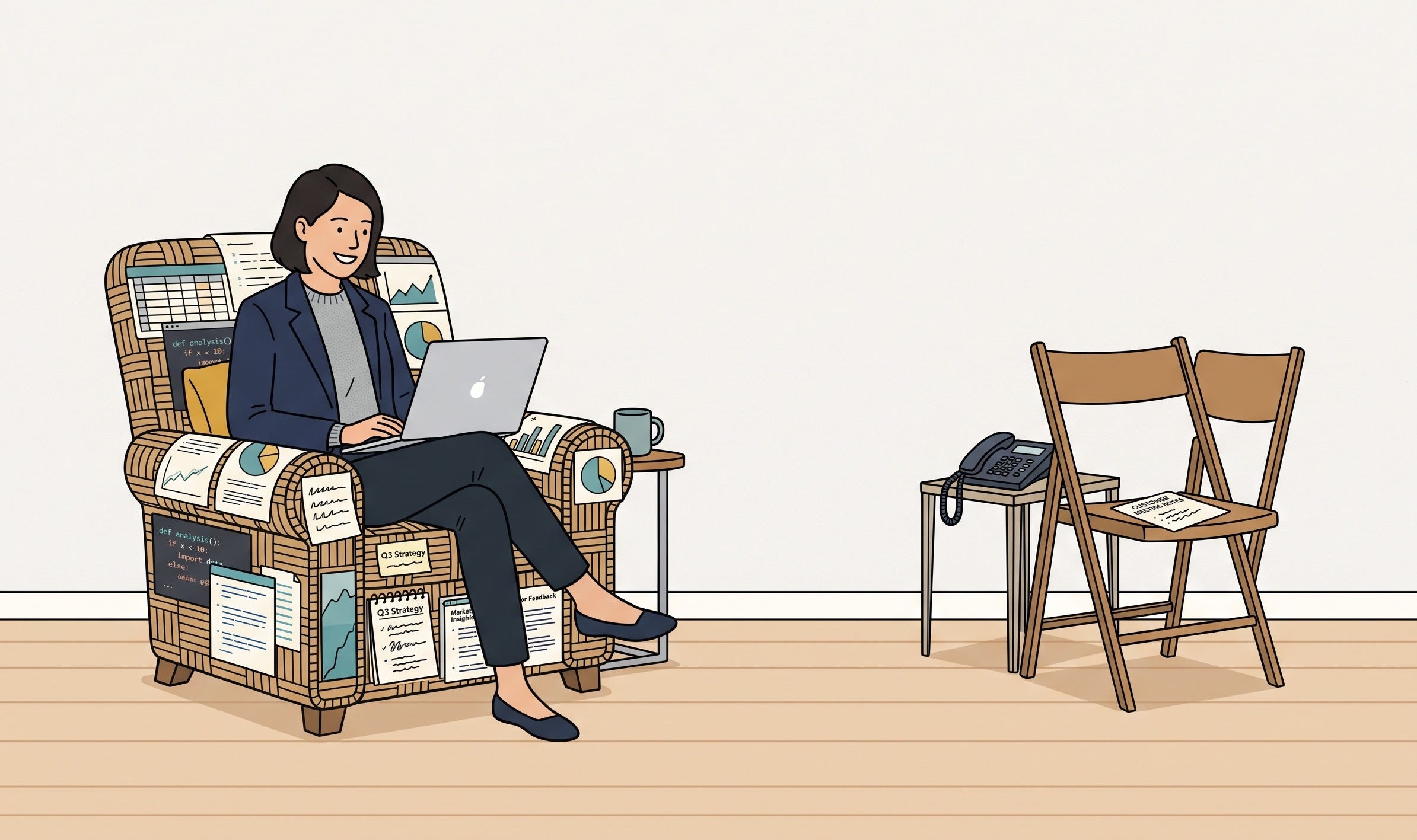
It can look a lot like being excellent at your job. 👇🏻
SPONSORED
Built with Prezi AI
I gave Prezi AI 30 minutes and a rough set of founder notes to build an investor pitch deck. Watch the experiment 👇🏻 | Try Prezi AI 🔗
Procrastination can look impressive
Nate Littlewood recognised the same pattern while running Urban Leaf.
His background was in engineering and financial analysis, so numbers and operations felt familiar. Marketing and sales were far less certain, and he drifted back towards work where he felt capable.
He built what he later described as “amazing spreadsheets and databases,” while the company needed his attention elsewhere more urgently.
Nate also became fascinated by everything he suddenly had the chance to learn. He was getting smarter, then realised much of it wasn’t useful to what the business needed from him at the time.
Competence can hide avoidance surprisingly well. You can be doing genuinely useful work and doing it well. Meanwhile, the business may need you somewhere else.
Work you know how to score
Damon Flowers noticed himself drifting towards the areas he already knew in the early days of his business.
He stuck close to what he understood while the jobs he was less comfortable with kept getting pushed back. He sees people obsess over details such as fonts and logos while harder jobs stay untouched.
That kind of work gives you clearer feedback. A spreadsheet can be right or wrong. A design can be improved. Code usually gives you something obvious to fix.
Emma Mills points to an even more ordinary version: disappearing into email for an hour because it feels productive when you’re unclear about what to do next. An inbox gives you a visible finish line too.
Sales doesn’t give you that certainty. You can prepare properly and still hear no.
Put something you’re proud of in front of customers and you may find out they don’t care, or that the last month of work was based on a bad assumption.
That uncertainty is what makes familiar work so easy to return to.
AI has made the hiding place bigger
Matt thinks AI coding tools have made an old habit much easier to indulge.
If you love making things, you can now keep going without anyone else needing to get involved. There’s always a new tool to try or a process you could spend an afternoon rebuilding.
And you don’t have to be building software to do it. Carly Meyers sees business owners pile up AI subscriptions because they’re frightened of falling behind, without knowing what they’re getting back.
After decades building software, Konstantin Klyagin calls AI a multiplier. If you haven’t thought the product through or understood what users need, you can simply produce more of the wrong work faster.
What problem am I learning this to solve?
If you can’t answer that, you may have found another way to stay busy.


“I just need another week”
Simon Jenner sees it when you keep delaying a launch. The technology gets blamed first. One more feature needs adding, or the marketing isn’t quite ready. “I just need another week.” Then another.
The feedback starts once real people see it. Until then, you’re still working mostly from assumptions about what they want.
Zain Peer ran into it while building London Nootropics. The recipes took around two years to develop. Even then, the packaging could’ve been better.
Zain says they could easily have spent another year perfecting everything. Eventually they learned to put something live once it was “good enough to get the data,” then improve it from there.
The difficult part is recognising when polishing has stopped reducing risk and started delaying judgement.
Two years and £5,000 later
Jack Good found out what waiting could cost. Early on, he inherited £5,000 and decided to build a marketplace connecting removal and storage companies.
He spent two years building and customising the site. By the time he released it, the £5,000 was gone.
Then the product failed. He hadn’t properly tested the idea before committing the time and money.
Once you’ve spent months building something, walking away means confronting the time and money already sunk into it.
Find the work you keep walking around
I’ve found one question more useful than asking whether I’ve had a productive week:
What important work do I keep finding a reasonable excuse not to do?
Maybe you keep improving the product because calling customers can wait until tomorrow. Or you rebuild the spreadsheet while the price stays where it is. Research can stretch for weeks when choosing a direction feels harder.
Sometimes the work you’re avoiding isn’t sales at all. It might be telling someone they aren’t working out. Maybe you keep putting off asking for money because another decision feels easier.
Learning is especially easy to justify because nobody can really accuse you of wasting your time.
Kate Assaraf realised bookkeeping was one of those areas for her. She didn’t understand it and had no desire to become good at it, so she hired someone who already was.
“I need to learn more first” sounds perfectly reasonable. Sometimes it’s simply how you buy yourself another week.
Matt asked about revenue because that was the test his friend had postponed for six months. The same test can be adapted to almost any kind of busy work:
What did the work actually change?
If weeks keep disappearing while the same awkward conversation goes untouched, pay attention to what keeps replacing it.
The work you’re avoiding probably won’t become easier while you perfect everything around it. Eventually, somebody else gets a vote.


Love this. It's so easy to do something that feels productive and call it a day, but you're just avoiding the stuff that actually matters.
Thanks for this Daniel! The comfort zone is an easy place to be, but almost never where true growth occurs!