


You can spend hours discussing the product, the company name and how you’ll launch. The harder questions get left until later.
Who has the final say when you disagree? What happens if one person works harder, the business can’t pay you or you want different exits?
When the company has no value and both of you are excited, those conversations can feel unnecessary. You trust each other and assume you’ll work out the difficult parts later. That’s the cheapest moment you’ll ever have to discuss them.
Once money, equity, staff and years of your life are tied up in the company, a disagreement can stop the business moving and leave you building something you no longer fully control. By then, the relationship may already be badly damaged.
I’ve lived through at least four versions of this, and the tension looked different every time. My conversations on Millennial Masters have shown me how much can be agreed early, before a disagreement becomes a breakup.
That’s why you need the co-founder version of a prenup. It sets out what happens when trust is strained and you can no longer agree. 👇🏻
New here? Millennial Masters shares practical lessons from founders on building better companies and handling the parts of the job nobody prepares you for. Subscribe for honest ideas on growth, AI, leadership and the decisions that shape your business.

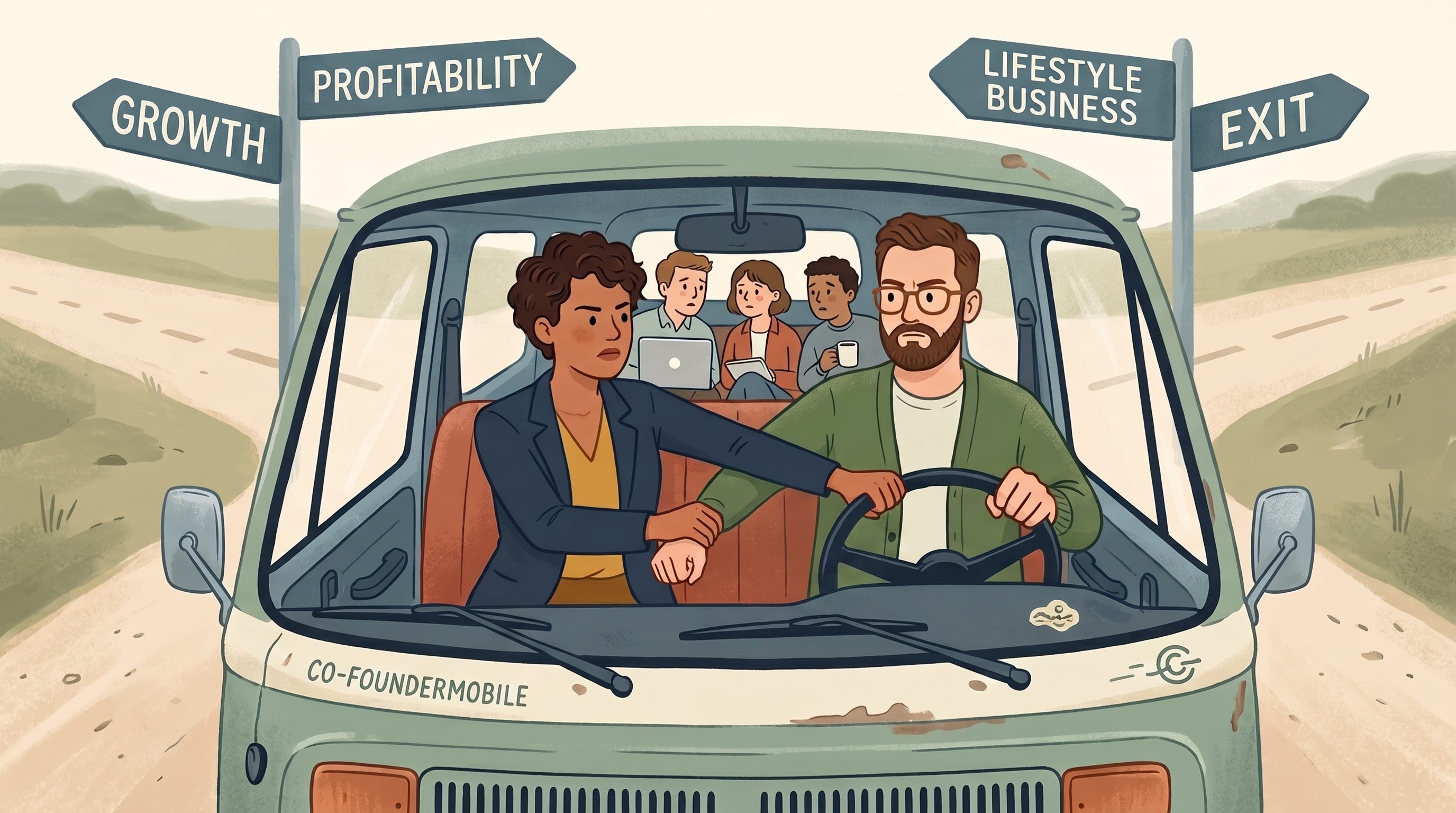
Do you really need a co-founder?
The first question is whether you need a partner at all. A gap in your skills doesn’t automatically mean someone else should own part of the company.
Kate Assaraf learnt that after a painful split. “You can’t transfer your passion for something to someone else,” she says. When she rebuilt, Kate hired a bookkeeper instead of bringing in another partner.
Equity can feel cheaper than salary when cash is tight, so you give away ownership to fill a role you can’t yet afford to hire for. The cost appears later if that person stops adding value while keeping a large part of the company.
James Church has seen how badly that can end. You bring in someone to handle development, find out they’re not as good as expected, then have to deal with “this 50% shareholder who’s no longer adding any value”.
A missing skill might call for an employee, contractor or adviser. Giving away part of the company needs to solve more than a hiring problem.
Date before you commit
Nick Telson-Sillett recommends spending at least three months “dating each other” before committing. That means time together beyond talking excitedly about the idea.
You need to know what drives the other person, what their life allows and how they work under pressure.
Those differences are difficult to spot while everything is hypothetical. Work on something real together and see how you both react to deadlines, money and problems.
Skills matter too. Joshua Dziabiak compares choosing a co-founder to “putting a ring on it” and says the person should complement you. “If they’re good at the same things you’re good at, they’re probably not the right partner.”
Agree what you’re building
You can start a company together with completely different ideas about the deal.
Michael Buckworth sees it happen when one person expects profitability to take five years and a sale to take a decade, while the other expects a million pounds in profit by year two and a huge exit in year three.
Both believe the plan is obvious. Those private assumptions shape almost every important decision later. Discuss the future before you both become attached to different versions of it.
Agree how much time you’ll each give the company, whether outside work is allowed, when you can start paying yourselves and how long you can manage without profit.
You also need to know whether you’re building to sell and what a good exit means to each of you.
Equal shares, unequal reality
A 50/50 split feels like the cleanest expression of trust. You’re starting together, so you divide the company equally and avoid an awkward negotiation. The problem starts when the contribution stops feeling equal.
Kate doesn’t believe responsibility can ever stay perfectly 50/50. Once the balance feels wrong, it starts eating away at the partnership.
The balance shifts when one person carries more of the work or risk, or life changes what the other can give. The same split can also leave the company stuck when neither of you can break the tie.
Peter Watson objects to automatic 50/50 splits. “Someone has to have the 51%,” he says. “The amount of businesses that go to zero is because two people just can’t agree. Deadlocks. Then what do you do? It’s over.”
An equal split can work if you agree who breaks a deadlock. Before dividing the company, agree what each of you will contribute and what happens if the balance changes.
Who gets the final call?
Gus van Rijckevorsel is particularly blunt about companies with two CEOs. To an investor, it can signal that nobody has settled who’s in charge.
You need to know who owns each part of the business and who gets the final call.
Kevin de Patoul argues openly with his co-founders and sees it as part of working together. After one difficult conversation lasting an hour and a half, he accepted that the other person was right.
The damage starts when nobody knows who decides and the argument goes nowhere.
Be clear about who is CEO, what each of you owns and which major decisions you must make together. Write down where one person has authority to decide.

Plan how either of you leaves
Discussing what happens if one of you leaves before the company has properly started can sound disloyal, as though you are already preparing for failure.
Michael compares a founders’ agreement to a prenup. You agree the terms while the questions are still theoretical, put the document away and hope you never need it.
Kate describes a business-partner split as feeling like a marriage ending. Once that happens, neither of you is likely to negotiate calmly.
Reverse vesting means you can receive shares at the start and earn the right to keep them over time. If one of you leaves early, the agreement can allow the unearned shares to be returned.
The agreement should also cover leaving, long-term illness, buyouts and ownership of the intellectual property.
Get qualified legal advice in the country where your company is registered. A solicitor can document the deal. They can’t decide what you both actually want.
Check the deal still works
A founders’ agreement captures what you both wanted when you signed it. The company and your lives will change.
Joshua Western checks in with his co-founder roughly every quarter. They ask whether they still want the same thing from the company and what an exit could look like.
One of you may become more cautious while the other wants to take bigger risks, and the roles you started with may stop fitting the company.
Tom Wallace-Smith calls this “alignment”. If there’s a problem, they take it straight to each other before resentment builds. The paperwork can’t do that for you.
The best time to discuss a breakup is while the relationship still feels secure.
A founders’ agreement can’t rescue the wrong partnership. It can bring hidden expectations into the open and stop a departure from paralysing the company.
Before dividing the equity, agree who makes the big calls, what you both owe the business and what happens if one of you leaves.


Been there, done that. Trust needs terms is the right frame. The version solo operators hit is the same problem with clients and contractors: the handshake feels fine until incentives split, and by then there is nothing to point at. Agreeing on the split and the exit before you build is the cheapest insurance there is. Good one.
Clear expectations protect both the business and the relationship, especially when pressure starts to build.