


— This article has been adapted and republished on Millennial Masters from my guest post for James Presbitero’s Unpromptable.
If you’re looking for the money in AI right now, I’d start with the boring stuff already sitting inside the business.
This keeps coming up across 70+ founder interviews. Old sales leads become worth chasing again and work that used to need another person suddenly doesn’t.
Building an AI wrapper and charging a subscription can look attractive until a model provider ships the same feature or a bigger product folds it in.
But a lot of it was there before AI showed up. That’s where I’d look first. 👇🏻
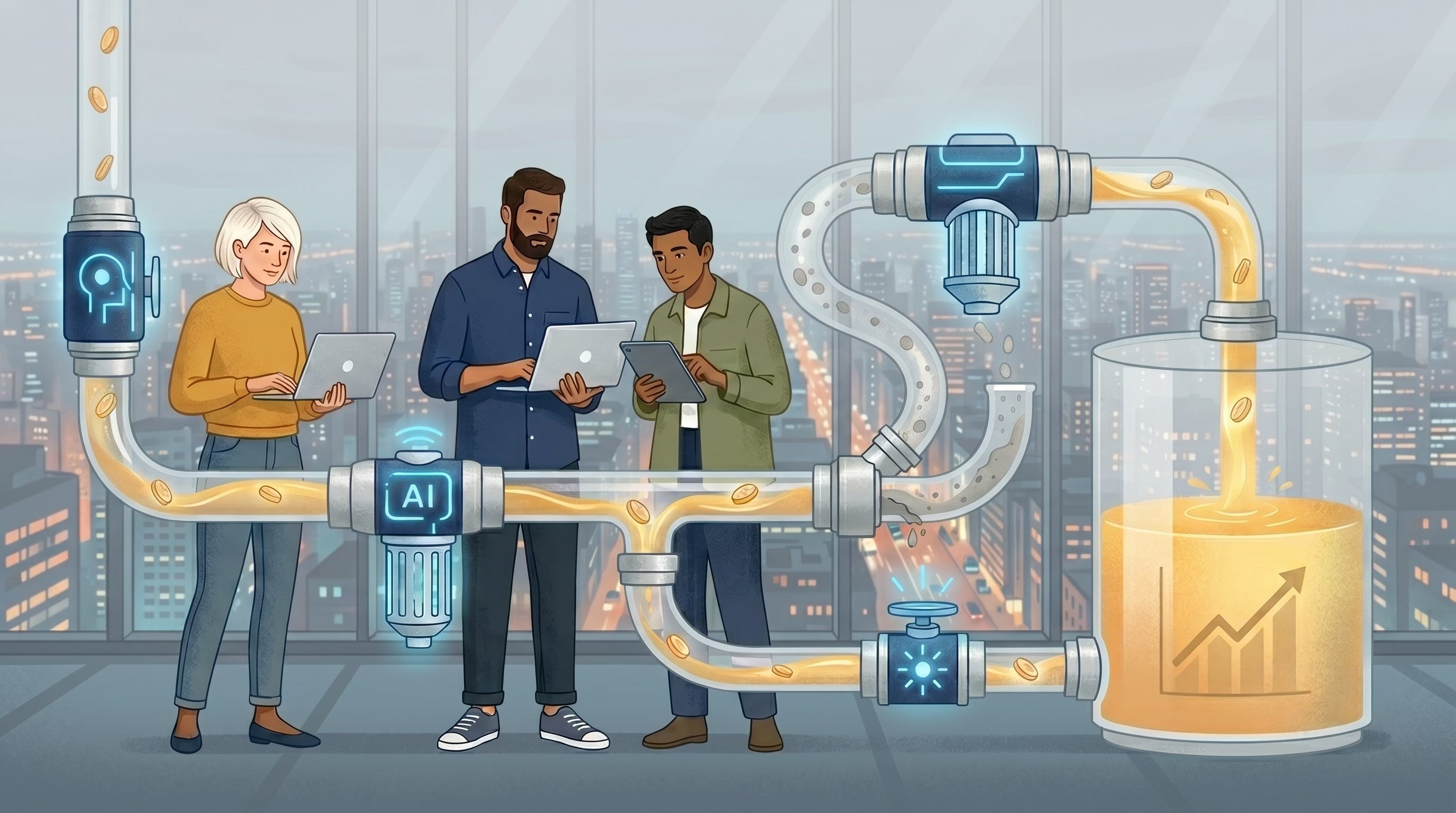
Margin comes first
AI can make the same sales more profitable.
If you know the work well enough to judge it yourself, AI can handle some of the tasks you’d normally hand to someone more junior.
You need fewer paid hours to get the same job done. That means keeping more of the money from products or services you are already selling.
Anjeanette Carter calls herself “an army of copywriters” after using AI. She stopped working with writers and cut a six-figure payroll.
She could do that because she already knew the job inside out.

The graveyard has money in it
Some of the best places to use AI have already been written off.
Ryan Carruthers starts with dead sales leads because there’s little downside if the system fails. The business had already given up on them.
His bots now have conversations and book sales calls from old lists nobody wanted to touch. AI made another pass through them worth the effort.
Yehong Zhu is building around media rights and data access as AI creates new buyers for material that already exists.
Think about what you stopped paying someone to do because it no longer made sense. Some of it might make sense again now.

New here? Millennial Masters shares lessons from founders who’ve built and grown companies. Subscribe for ideas on AI, leadership and the decisions that rarely come with a playbook 👇🏻

Hiring gets pushed back
AI buys you more time before the next (human) hire.
If someone experienced can now cover jobs that used to need extra hands, you can get further with the people you already have.
Nick Holzherr has seen firms hire fewer marketing juniors. More senior people who know how to use AI are doing jobs that used to go to juniors.
Carly Meyers believes huge businesses will be built by teams of one, two or three, with AI doing things they’d once have hired for.
So you can wait until there’s enough coming in to justify another salary.

Bad AI work gets expensive fast
“If you don’t have expertise in a specific area, AI isn’t going to make it better. It’s only going to amplify your limited knowledge,” Anjeanette Carter said.
When you can’t spot a bad answer, getting it faster doesn’t help. Any saving disappears once someone has to redo it. A bad call can cost far more than a few saved hours.
“Human plus AI is currently still better than AI only in most cases,” Josh Payne said.
Ben Tasker told me about a company that replaced its call centre with AI and fired the staff. A few weeks later, it hired them back because the system was awful.

People still have to choose you
Now that AI lets more people get a usable digital product out cheaply and quickly, simply having one gives you less of a head start.
If you no longer need developers in the old way to get a product off the ground, Thibault Louis-Lucas thinks distribution and storytelling become far more important.
At 10x lower costs, Simon Jenner says some niches that once made no sense suddenly become worth serving. But getting it made still leaves you with the problem of getting somebody to buy it and come back.
For Gary Das, customer trust is getting harder to earn. Freddie Pullen thinks long-form human formats matter because they still feel unmistakably real.
Polish is cheap now, which puts more pressure on whether people trust who they’re buying from.

AI changes what’s worth doing inside a business.
An old lead list can start producing revenue again, and the next hire can wait until there’s more money to support it.
I’d look there before I went hunting for or launching another AI product.


Great insights Daniel. Interesting how yesterday’s unviable products can now become viable due to margin expansion. Also distribution and branding (trust) being the moat. I would add the another one is the ability to quickly adapt through feedback loops and quick iteration.
It's the infrastructure