



The “build it and they will come” myth is still costing startups time they don’t have.
Building software is getting easier. Getting the right people to care is getting harder.
Jason Tan writes Behind the Scenes and created Engage AI, which he grew to 100,000 users without VC funding or a marketing team.
In this guest post, he explains how he stopped treating distribution like a viral lottery and used code itself as a route to demand. 👇🏻
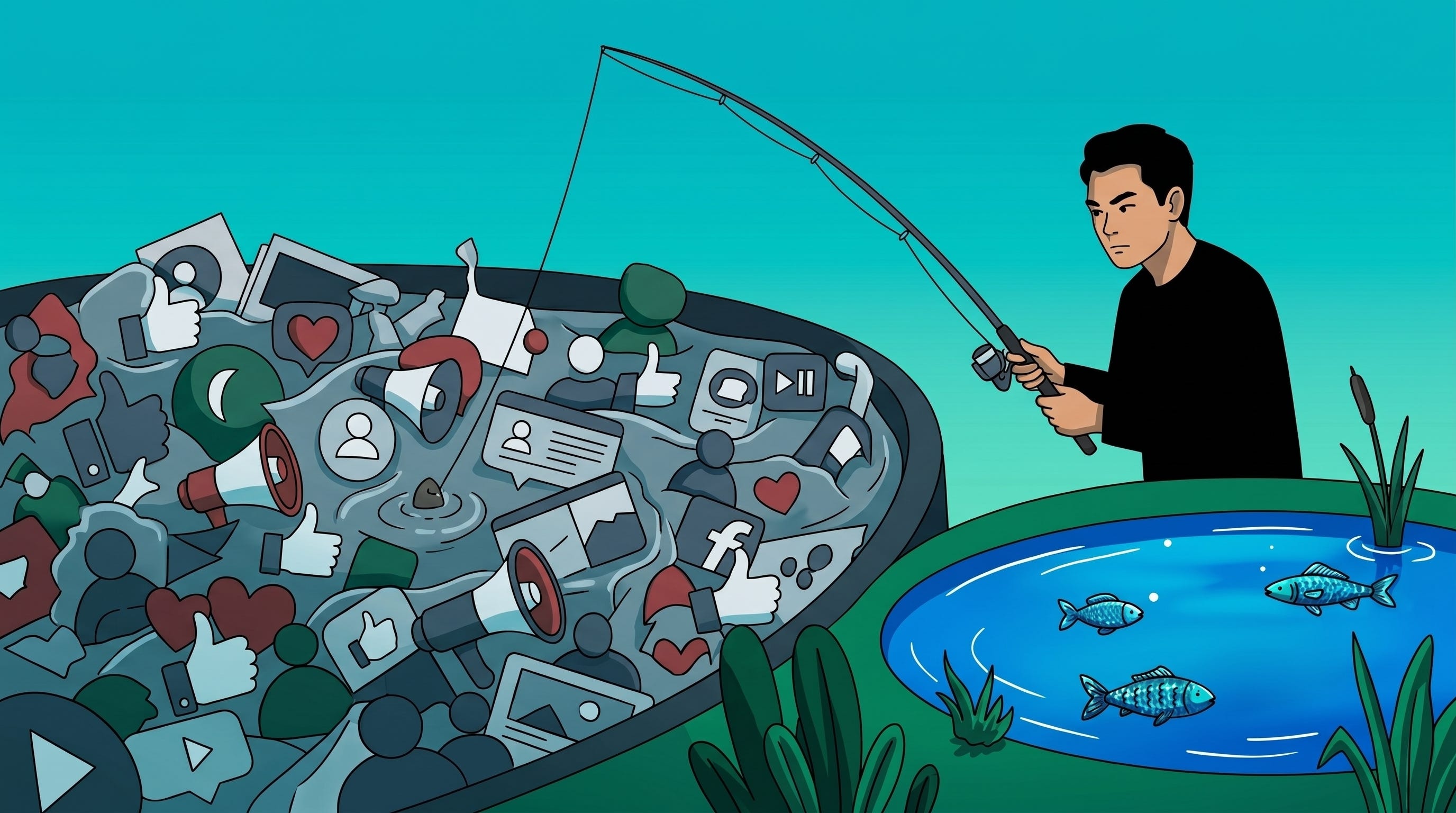
The viral myth
A founder told me recently that his startup’s growth plan was to keep posting until something worked.
Since early 2026, I’ve been mentoring startups at the Founder Institute and River City Labs. About two months ago, I was in a mentoring session with a founder named Mark. After we finished talking about his product, I asked about growth.
“What are your key distribution channels? What are you doing to market the startup?”
“We post a lot of content on LinkedIn and Instagram,” Mark said. “We’re also thinking about repurposing that content for TikTok.”
“Why LinkedIn, Instagram, and TikTok? They have completely different audiences.”
“Maybe, but our target audience is on all these platforms, so it makes sense to be everywhere.”
“Which one is working so far?”
Mark paused. “We haven’t had anything go viral yet. We’re still trying to figure out what will go viral.”
He sounded exactly like the old me.
Back in my consulting days, I was on LinkedIn, hosted a podcast, made YouTube videos, and worked hard to become a thought leader. Some posts did go viral, and they brought views, but they didn’t bring many paying customers.
A lot of founders treat distribution like a lottery. They build the product, post everywhere and hope the algorithm takes over. It almost never works like that.
Demand comes from going narrow
You need to know who the product is really for, where those people already spend attention, and how to reach them in a way that feels useful.
With Engage AI, we ignored most people on LinkedIn. The average employee comments occasionally and can get by with copying from ChatGPT when they want to sound informed online. That wasn’t our customer.
We went after a very specific group: small business owners in professional services, usually with teams of five to twenty, and usually at least a couple of years into operating. They relied on relationships to win work and stayed visible by leaving thoughtful comments on prospects’ posts every day.
The problem was the volume. Doing that 50 to 150 times a day could take up most of the working day. Some were paying virtual assistants in the Philippines around $1,500 a month to do it. Even then, the comments were often generic because the assistants didn’t have the subject knowledge to engage properly. It still took hours.
That was the problem we built for. A small group with a painful, repetitive job and a reason to pay to make it easier.

Code can be a distribution channel
When I built Engage AI, I knew who it was for. The harder part was getting it into their hands. I had no VC funding, no marketing team, and no real ad budget. I tried a lot of things, but only a few really worked.
The shift for me was realising that my technical skill could help distribute the product, not just build it. Code could be a route to demand.
One of the strongest examples was a free Chrome extension called LinkedIn Hashtag Analytics. When a user hovered over a hashtag on LinkedIn, it showed the exact follower count. It solved a small but real problem, and we gave it away for free.
It put us in front of LinkedIn power users, and the effect compounded in ways I didn’t expect. Hootsuite and HubSpot shared it and linked back to us because it solved something for their audiences. LinkedIn creators did the same. They were happy to recommend it because it was helpful, not because we paid them.
That helped from an SEO point of view, but the bigger point was trust. The extension became something people used repeatedly, which made the paid product feel more credible when they came across it later.
That single free tool brought in 35,000 users in two and a half years.
Build something useful first
A lot of founders try to introduce the product before they have earned any attention.
A better route is to build something small and useful that solves a narrow problem for the same audience.
You’re giving them a reason to notice you before asking them to trust the main product.
Go where trust already exists
The second thing that worked was borrowing an audience rather than trying to build one from scratch.
I used to run a podcast called The Analytics Show, so I already knew how much work it takes to build and keep an audience. I also knew my old audience was wrong for Engage AI. They were mostly enterprise executives.
So instead of starting over, I pitched myself as a guest on hundreds of sales podcasts.
One of my team members spent an hour every day pitching hosts and following up. Like most outbound work, the first message rarely did much. Most of the results came through follow-up.
It worked because those hosts had already built trust with the people I wanted to reach. I didn’t need to build that trust from zero. I needed to show up in a place where it already existed.
That strategy brought in 25,000 users.
The same logic applied elsewhere. We integrated Engage AI into CRMs like Pipedrive, Zoho CRM, and HubSpot because our customers were already spending part of their day there.
We wanted the product to fit naturally into software they already used and trusted. That meant working with an existing habit instead of trying to create one from scratch.

Automate reach carefully
The third thing that worked was using our technical skills to automate parts of distribution. We built AI agents and scripts to extend our reach, and some of that brought in another 25,000 users.
A few examples worked especially well at the time. We published a book on Amazon through one of those systems. We used automation to comment on journalists’ LinkedIn posts, which helped us land earned media.
Some of those experiments were strange, and some only worked because AI still felt new. That matters because I wouldn’t present those tactics as a template to copy now. The better lesson is narrower.
If you’re a technical founder, you can automate repeatable parts of distribution in the same way you automate repeatable parts of operations.
You can remove friction from research, follow-up, outreach support, media tracking, and other work that usually gets done inconsistently.
The specific tactics aged quickly. The lesson didn’t.
What didn’t work
We also tried plenty of things that went nowhere.
Affiliate marketing didn’t work the way people often talk about it. You can’t set up a programme and assume partners will come running. You still have to recruit them, and in B2B you usually need a stronger reason than a commission.
LinkedIn automation spam was a waste of time. We sent at least 10,000 automated messages to business owners we knew were active on the platform. It barely brought in any paying customers. Mostly, people were annoyed.
Product Hunt also did very little for us. We launched there, won Product of the Day, got the traffic spike, and watched it fade. The audience was wrong. Most Product Hunt users were not the sort of LinkedIn-heavy relationship builders we were targeting.
The things that worked all had the same shape. They got us in front of the right people in places those people already trusted.
The developer’s advantage
There is a limit to this approach. Eventually, side projects and technical shortcuts stop being enough. At some point, you need a more formal marketing engine as well.
But getting off the ground is a different phase.
Building software is easier than it used to be, which makes distribution harder.
If you’re technical, that doesn’t mean you’re stuck. It means you may already have a useful advantage if you use it properly.
Technical skill can become distribution skill.
It can help you build a free tool that earns attention, create integrations that put your product inside someone else’s workflow, and automate the repeatable parts of getting in front of the right people.
The job is to understand who your buyer is, where they already spend attention, and what you can build that gets you in front of that exact group.
Code didn’t just help me build the product. It helped me get the first users.
👤 Jason Tan writes Behind the Scenes, where he shares practical lessons on building AI products and scaling adoption without VC funding or a marketing team. He created Engage AI, grew it to 100,000 users worldwide with a lean team, and now works as Fractional CAIO at Ascendnce, helping SMEs use AI inside their operations. He writes about bootstrapped AI products, growth loops, user adoption and building for niches big tech is unlikely to reach. Connect with Jason on LinkedIn.

See The Bootstrapping Framework in action Jason is also hosting a free live session: The Bootstrapping Framework: 0 to 100k Users. The session goes beyond the Engage AI story into real teardowns and an open Q&A. Bring your product ideas, explain where you are stuck, and Jason will help you think through how to map your first 1,000 users. Register here.


 | A guest post by
|
I won a few social media lotteries before, including the Top Voice Badge by LinkedIn but none of those matter if that’s not where your targeted customers hang out. Read here why we are all drowned in the social media world that may not get us anywhere.
Please say it louder for all of the ignorant CMOs in the room! Great piece and breakdown 💪