


I’ve spoken to enough Millennial Masters who’ve sold their businesses to know how much getting to an exit takes out of you.
Ask them what the years around the sale felt like and you’ll hear about exhaustion, or going back to work on Monday with the millions already in the bank.
Over the next three Fridays, I’m bringing those stories together in 🚪The Exit Files.
I’m following the experiences of ten founders, from hypergrowth, through to the sale and into life after. First, the years spent building towards a payout nobody could guarantee, and what they really cost. 👇🏻
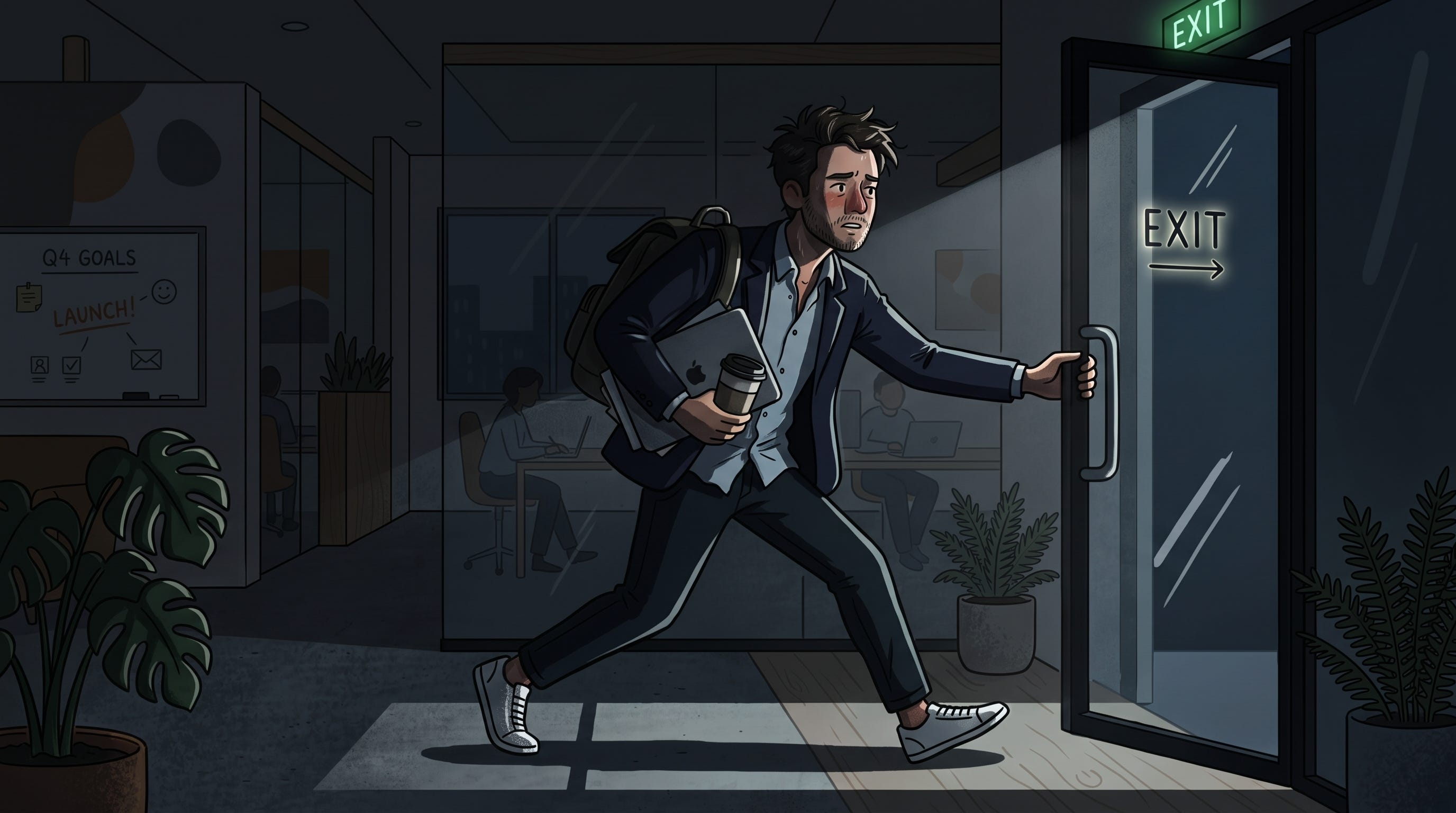
The sale is still years away
Luke Tobin was winning work faster than his agency could look after it. Digital Ethos was doubling in size each year, heading towards almost 100 people in five years. He was trying to hire enough people and put systems in place to deliver the work he’d already sold.
“Honestly, it was always a bit unstable.”
Every new client creates work that somebody has to deliver, and hiring someone to do it takes time. When the business doubles again, whatever worked last year is already stretched.
He eventually sold the business for a reported £8 million. Knowing that makes the pressure easier to justify in hindsight. He had to keep running the business without knowing whether the sale would go through. The strain can start years before you negotiate a sale.
Keeping up is hard work
Matt Watson lived it at VinSolutions, which made software for car dealerships. During the financial crisis, dealers were looking for ways to cut costs and sell cars online. That created demand for his business at a time when others were struggling.
“We were growing way faster than we could even keep up.”
VinSolutions reached $30 million in annual revenue without outside investment. But it didn’t have enough servers or support people. Matt could see how a cash injection would help the team hire ahead of demand. Eventually, profits grew enough that they no longer needed outside investment.
Revenue makes a company look further along than it may feel when you’re running it. A customer can sign today and need help tomorrow. Recruiting and training someone to provide that help takes longer. Until then, you and your existing team take the hit.
Luke’s agency and Matt’s software company were different businesses, yet both had customers arriving faster than they could serve them. Keeping up was exhausting, and every new sale added more work to an already stretched team.
Getting bigger doesn’t guarantee this will ease. More demand puts more pressure on your team while customers still expect everything on time.
Doubt follows you home
Joshua Dziabiak wanted The Zebra to improve how people bought insurance. Getting established meant using a lead generation model similar to the one he wanted to change.
He had to convince investors and colleagues that this approach would help him get there. After getting people excited about the business, he found himself in bed wondering, “is this really how I should be building this company?”
Joshua felt his instinct was ultimately right. The route worked, and he found the experience rewarding. He also joked that building the business took ten years off his life.
You can spend the day defending a decision and still doubt it when you get home. Your team needs enough confidence to keep working, so you have to decide how much of that uncertainty to share.
The Exit Files 🚪
• ONLY on Millennial Masters •
Protect yourself and the team
Luke suffered burnout while building the agency. He said the leadership team he’d already put in place kept the business ready to sell. If everything had still depended on him, burnout could have crippled it.
Two employees walked into Luke’s office in tears after a client shouted at them and refused to listen. The client paid £10,000 a month and had only worked with the agency for four months. Luke called them and ended the contract.
He gave up £120,000 in annual revenue to protect his team. A couple of years earlier, he said, he wouldn’t have dared. By then, he’d seen enough of the damage the client was doing.
If growth is wearing you down, look at the work you’re agreeing to take on as well as the people you need to hire. Luke spent years learning how to win clients. Letting this one go became part of learning how to run the company he’d built.
The years won’t come back
Nick Telson and his co-founder Andrew had a sale in mind when they built DesignMyNight. They worked backwards from the amount they wanted to make. By the time they sold in 2017 for over £25 million, they’d spent seven years working relentlessly.
Building through his twenties meant Nick missed some of the freedom his friends enjoyed as they started earning. He felt he hadn’t always been the friend or son he wanted to be. The people close to him understood, and he’s since been more deliberate about those relationships.
He doesn’t regret building DesignMyNight. He loved doing it and values the financial freedom it gave him. There’s no reason to turn that into a confession that success wasn’t worth it. He can be pleased with the choice and still recognise what those years asked of him and the people around him.
Melissa Kwan remembers making excuses to meet friends after dinner because she couldn’t afford to join them. Before selling Spacio for a seven-figure sum, she missed weddings and lost friendships as business trips took priority. She recalls the years before building eWebinar as “almost 10 years of pure suffering”.
She still feels she gained more than she lost, including financial freedom and meeting her husband along the way. But she couldn’t know that while she was making those sacrifices. “It didn’t feel like I was going anywhere.”
If you’re building towards a sale, be frank with the people close to you about what you’re asking of them. A payout won’t give you those years back.
Next Friday on 🚪 The Exit Files
The money arrives, and there’s still work on Monday. Part two gets into earn-outs and the years spent working for someone else in the business you built.
Subscribe to get it in your inbox 📧


Looking forward to the rest of the series. "The years won't come back" framing reminded me of that Alex Hormozi quote:
"There's no perfect way to live your twenties. You either live 'em up and become an underskilled 30-year-old, or you work 'em up and become an under-lived 30-year-old. You just need to figure out which you'd rather be, accept the tradeoffs, and know that there are no do-overs."