



There’s still too much AI advice aimed at people who want a shortcut.
But that’s not usually how the useful stuff works inside a business.
The tool is there. The output is weak. The instinct is to blame the model.
Jenny Ouyang makes a better case than most for why that usually misses the point.
She runs Build to Launch, where 5,000+ builders learn to ship real products with AI.
Her guest piece gets into what changes when you treat AI less like a chatbot and more like a hire. 👇🏻
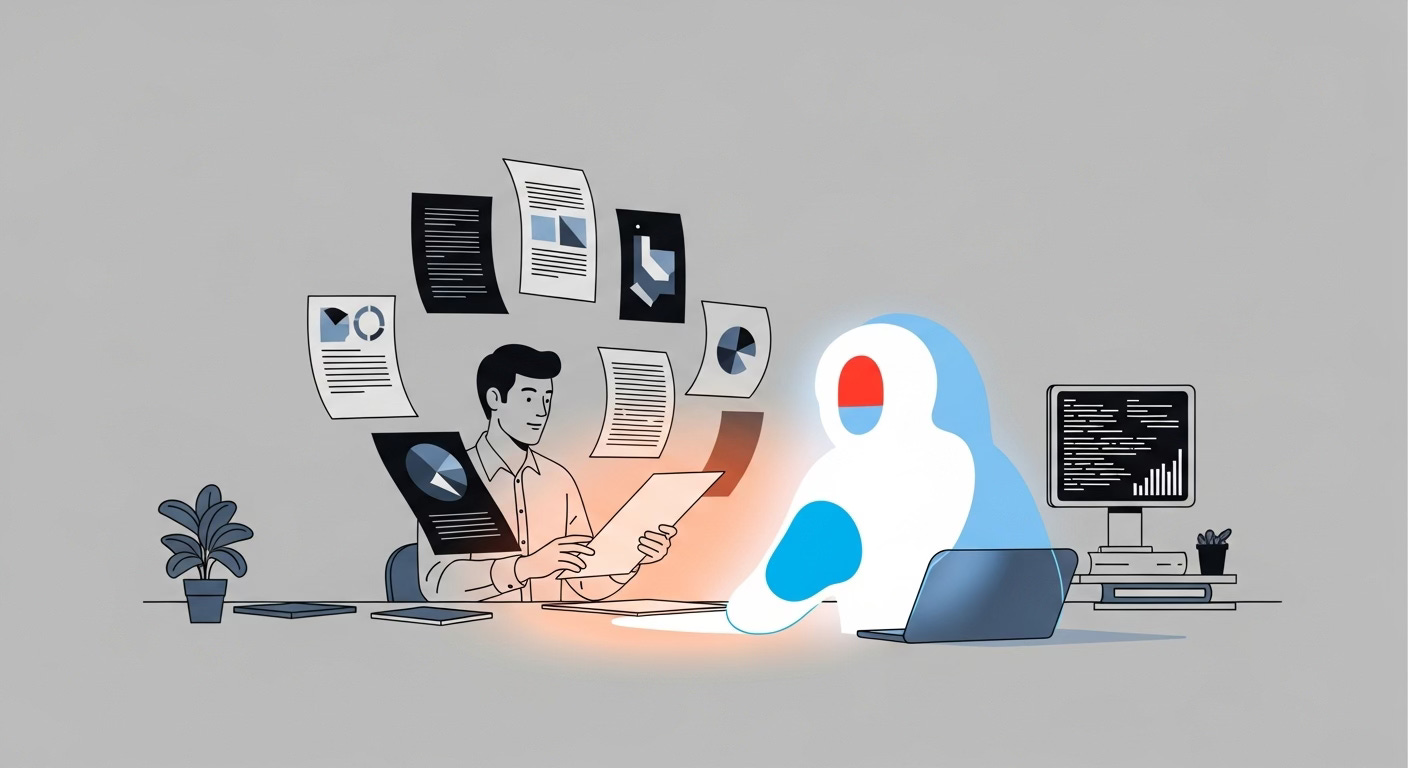
The hire nobody trained you for
Most founders interact with AI the way they’d interact with Google: type something in, hope for the best, get frustrated when the output is mediocre.
That’s like hiring someone talented and never telling them what the company does.
AI is the teammate who never sleeps, has read everything on the internet, works at impossible speed, and has zero judgment about what actually matters to your business.
Left unmanaged, it produces confident-sounding work that misses the point entirely. Managed well, it becomes the most reliable operator on your team.
The shift isn’t technical, but managerial. And if you’ve ever onboarded a brilliant but unpredictable new hire, you already have the instincts for this.
New here? Millennial Masters shares practical lessons from founders on building better companies and dealing with the parts of the job nobody prepares you for. Subscribe for the next one.

Set direction before you set tasks
When a new team member joins, you don’t hand them a task on day one and expect perfect output. You give them context: what does the company do, what does quality look like here, what are the unspoken rules. AI needs the same onboarding.
In my workflow, I maintain what’s essentially an employee handbook for AI. It’s a document that spells out: who we are, what our voice sounds like, what standards we hold, what mistakes to avoid, and what “done well” looks like. Every single task the AI touches starts from that foundation.
When I skip this step (and I still do sometimes, because speed is tempting), the output is generic. It reads like it could’ve been written for anyone. The moment I set direction first, the output sounds like it came from someone who actually works here.
The management principle: Context before tasks. Always.
If you’re a founder delegating to AI for the first time, write down three things before you open any tool:
What does your company/brand actually sound like? (Not “professional.” Be specific. Conversational? Data-driven? Blunt?)
What are the non-negotiable standards? (Accuracy over speed? SEO matters? No jargon?)
What should AI never do on its own? (Publish without review? Make claims about customers? Touch financials?)
That document becomes your home truth. Write it once, and every interaction with AI improves from that point forward.
Give feedback, don’t start over
Here’s the pattern I see constantly: someone gives AI a task, gets a mediocre result, scraps it, and tries a completely new prompt from scratch.
That’s the equivalent of firing someone after their first draft.
The founders getting real value from AI treat bad output as a feedback opportunity. When the first result misses the mark, they tell it specifically what’s wrong.
Not: “This isn’t good, try again.”
Instead: “The tone is too formal for our audience. Make it conversational, like you’re explaining this to a smart friend over coffee. Also, the second section jumps to a conclusion without enough evidence. Add a specific example.”
That’s a performance review. And it works exactly the way it works with people: specific, actionable feedback produces better results than vague disapproval.
I routinely go three to five rounds of feedback on a single piece of work. Not because AI is bad at its job, but because good output is iterative.
The same is true when you’re managing humans. The difference is AI doesn’t get defensive, doesn’t take it personally, and can turn around revisions in seconds.
The management principle: Iterate, don’t restart. Your feedback is the most valuable input in the system.
Consistency from systems, not supervision
If you’ve ever managed a growing team, you know the moment when things start breaking: when the work depends on you being in the room.
The fix is always the same. You create systems: templates, checklists, standard operating procedures. AI works identically.
I run 15+ specialized AI configurations for different types of work: research, writing, code review, SEO, editing. Each one has its own “job description” with specific instructions, quality standards, and guardrails.
The research agent knows to cite sources. The editing agent knows our style guide. The code review agent knows our security standards.
This means I don’t re-explain the basics every time I start a task. The system holds the standards. I just point it at the work.
For founders and operators, this is the unlock. You don’t need 15 agents. Start with one reusable prompt template for the task you do most often:
If you write weekly updates, create a template that includes your voice, your format, your typical structure.
If you review proposals, create a checklist prompt that evaluates against your actual criteria.
If you do market research, create a research brief that specifies what sources you trust and what depth you need.
Save it, reuse it, and refine it over time. That’s how you scale AI output without scaling your own involvement.
The management principle: Build systems once. Run them repeatedly. Improve them incrementally.
Know when to step in & when to let it run
The hardest management skill, with people or AI, is knowing when to get involved.
Here’s the decision framework I use, and it works the same way any experienced manager delegates:
Let it run when the cost of a mistake is low: internal notes, first drafts, brainstorming, data formatting, meeting summaries. If an error takes 2 minutes to fix, the review isn’t worth your time.
Review before it ships when the output is client-facing, public, or financially significant: proposals, published content, anything with numbers that someone will act on. AI is confident even when it’s wrong. Your job is to catch the difference.
Do it yourself when the task requires your specific judgment, relationships, or lived experience: strategic decisions, sensitive communications, anything where your reputation is on the line in a way that a quick fix can’t undo.
Most founders err in one of two directions. Some review everything, which defeats the purpose of having a fast teammate. Others review nothing, which eventually produces an expensive mistake they could’ve caught in 30 seconds.
The management principle: Delegate based on the cost of failure, not the difficulty of the task.
The job has changed, and that’s the opportunity
Here’s what I want to leave you with.
The founders getting disproportionate results from AI often realised that their role shifted. Their focus moved from doing the work themselves to defining what good work looks like and shaping how it gets done.
That’s a management role. It involves setting direction, giving feedback, building systems for consistency, and deciding where output can run with autonomy and where it needs closer review.
The tools will keep getting better and the models will keep improving. What compounds over time is your ability to manage the process and shape how the work flows. That skill carries forward as the systems evolve.
You’re developing a management capability that scales with each new AI system that ships.
If you’re reading this thinking you already know how to manage, that foundation still applies here. It simply needs to be directed at this layer of work.
Start here
Everything in this article came from doing this hands-on, not reading about it.
If the management mindset clicked for you and you want to see what it looks like in practice, I wrote a companion piece that walks through 12 projects in a deliberate progression: from a 10-minute build to a system that runs your content, research, and publishing without you touching it.
If you’re a founder or operator, skip straight to Tier 3. That’s where the management principles from this article become real infrastructure: a personal command center that encodes your best workflows, a research pipeline that runs autonomously, and a one-center ecosystem where you sit in one place and everything amplifies outward. That’s the part built for people who think in systems, not code.
And if you want this kind of thinking every week with practical AI systems, real examples, that’s what Build to Launch is. 5,000+ founders and builders getting the playbook for making AI actually work.
👤 Jenny Ouyang runs Build to Launch, a newsletter and community for builders shipping real products with AI. She’s built and launched 10+ products, published 100+ articles, and created the systems described here, where AI operates as a managed team, not a magic wand. Subscribe to Build to Launch.



Thank you for this opportunity Daniel! Such an honor to contribute to your newsletter!
Managing tools well often matters more than the tools themselves.