



David Roy revealed how AI can filter a proposal before a human ever sees it when the claims are vague and the proof is weak.
Colette Molteni looks at what happens next. The buyer opens it, but the proof sits too far from the claim and they’re left to connect it themselves.
That extra work creates doubt. The longer they search, the easier it becomes to stop.
Colette spent eight years in sales and revenue operations analysing where deals slowed down and why buyers disengaged.
She writes Empathy Elevated, a newsletter on clearer communication and better decision-making. Her guest post shows why putting the proof where the buyer needs it changes everything. 👇🏻
New here? Millennial Masters shares practical lessons from founders on building better companies and handling the parts of the job nobody prepares you for. Subscribe for honest ideas on growth, AI, leadership and the decisions that shape your business.

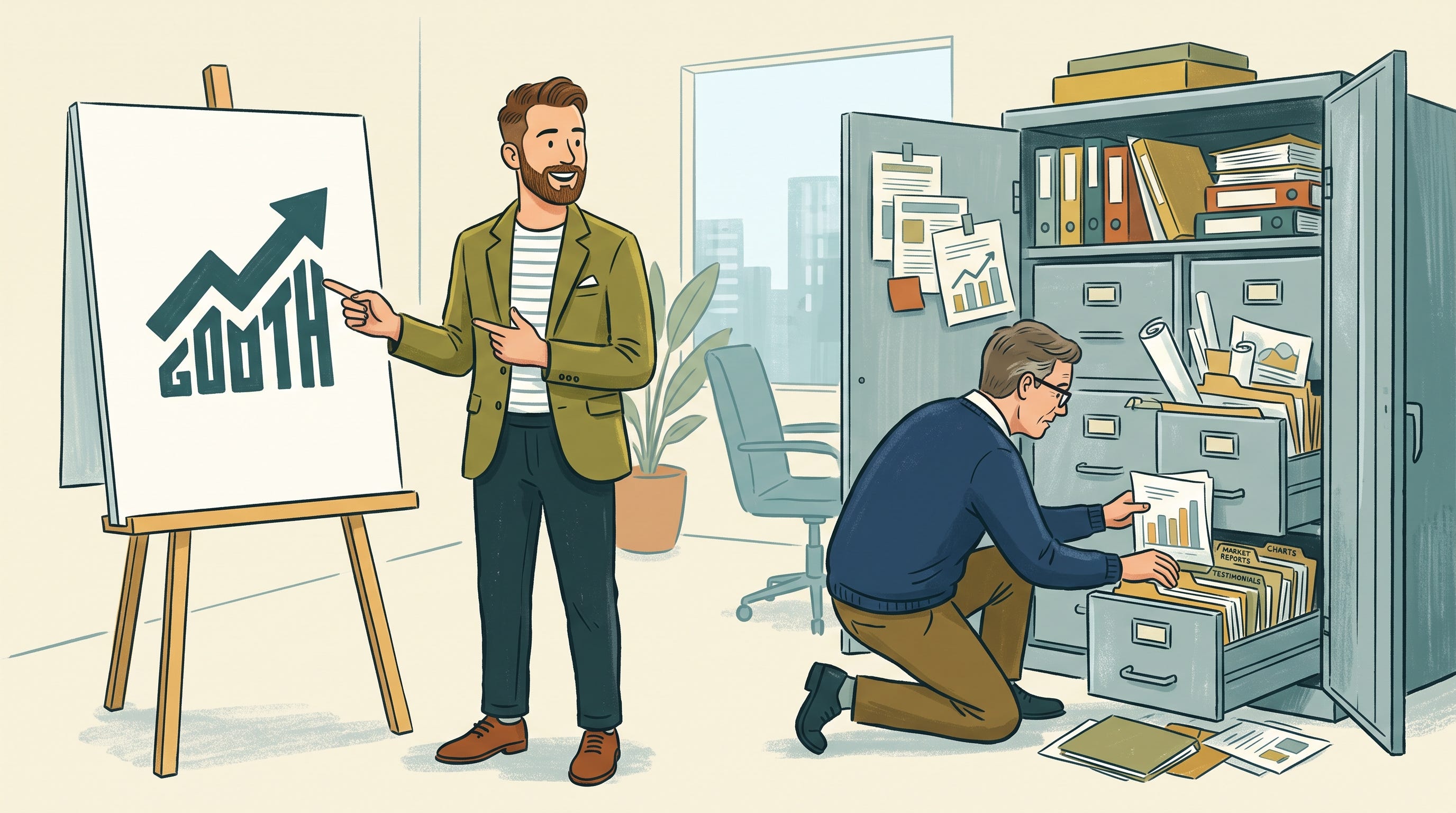
It was a tough conversation with Brice. A deal had gone quiet. It started with a DM asking if I had a few minutes to chat. I did, so we got straight into the account.
There were several opportunities on the table, including one large enough to put him over quota for the entire year in Q2.
But he wasn’t calling to celebrate. “She just went cold.”
I needed to understand what had happened, if anything. It wasn’t the first time I’d heard the story. Different rep, different company, different product, but the same commercial problem.
Every deal has its own story. The pattern underneath is often much more familiar.
Why buyers stop
It isn’t always the price or scepticism.
The easy answer is that the buyer ghosted you, or the timing wasn’t right. That may be true. The bigger problem is usually the work required to connect your claim to proof that their pain will actually go away.
Every time a buyer has to hunt for evidence, flip through pages or take your word for it, you’re asking them to do more work. Eventually, the buyer stops and steps away.
Looking at enough stalled deals, the same pattern kept appearing. Once an opportunity spends longer than average in a stage, it’s often close to dead.
The number of days isn’t the cause. It usually means the buyer has been left searching for answers.
The document has been sent. The follow-up notes are in their inbox. But there’s no response.
The problem is the distance between the claim and the evidence. That distance is measured in seconds, pages and scrolls. The more work it takes to understand why they should believe you, the easier it becomes to stop.
Where proof gets buried
The claim and the evidence often live in different places. The value proposition comes first, while the metrics and testimonials sit somewhere else.
The buyer is left to connect them. If they don’t, uncertainty fills the gap.
They’re looking for a solution. But when they have to do the research themselves, confidence starts to fall.
For sales, this can look like a messaging or communication issue. Brice certainly thought it was.
The issue is usually placement. The message may be fine. The buyer simply reaches the proof too late.
Before & after: The same claim, easier to trust
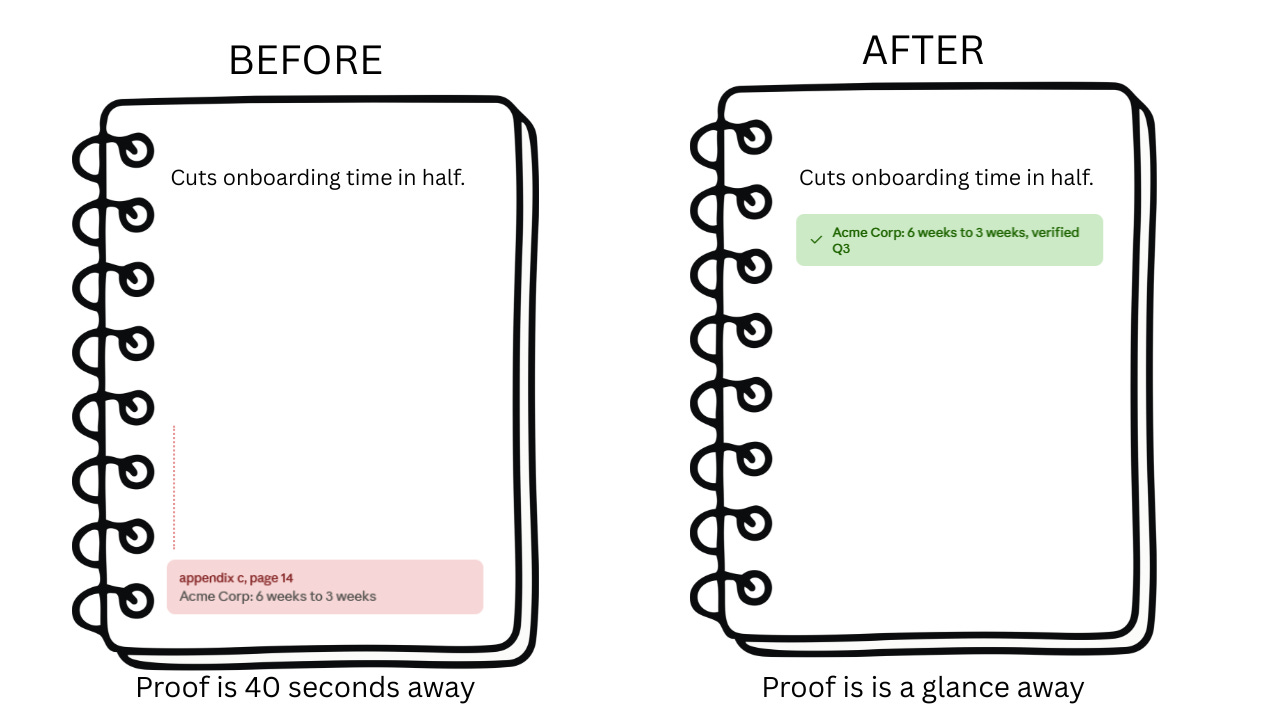
Nothing changed except where the proof appeared.
The claim didn’t change. In the first version, it appeared where you would expect it, but the proof sat much further down the page, beyond the few seconds most people give before deciding whether to keep reading.
In the second version, the same proof moved up beside the claim. Nothing else changed.
Now the buyer sees the evidence at the exact point they need it. They don’t have to search for it or make the connection themselves. The claim becomes easier to trust because the proof is right there.
Run the test before you hit send
For every claim in your proposal, deck, or page, ask yourself: can the buyer find the proof within a glance? If not, move it.
What happened with Brice that day was not unique. It’s a pattern I have seen many times, and in many cases it could have been prevented.
This is about catching the problem before the document leaves your hands, rather than diagnosing it after the deal has gone quiet.
Most buyers don’t walk away because they disagree with you. They walk away because understanding your case became work.
The easier you make the proof to find, the less work the buyer has to do to say yes.
👤 Colette Molteni writes Empathy Elevated, a newsletter about clearer communication and better decisions. She spent eight years in sales and revenue operations analysing where deals slowed down and why buyers disengaged. Connect with Colette on LinkedIn.



Moving the proof right next to the claim seems obvious once you see it.