


Updated September 2026: I first published this after hearing Lara Acosta explain her SLAY framework at The Business Show in London. I’ve now expanded it with a clearer explanation of how the framework works and a worked example showing how to use it in a real LinkedIn post.
Lara Acosta’s SLAY framework is a four-part structure for writing LinkedIn posts: Story, Lesson, Actionable advice and You. It gives each post a personal starting point, something useful for the reader and a natural way to bring them into the conversation.
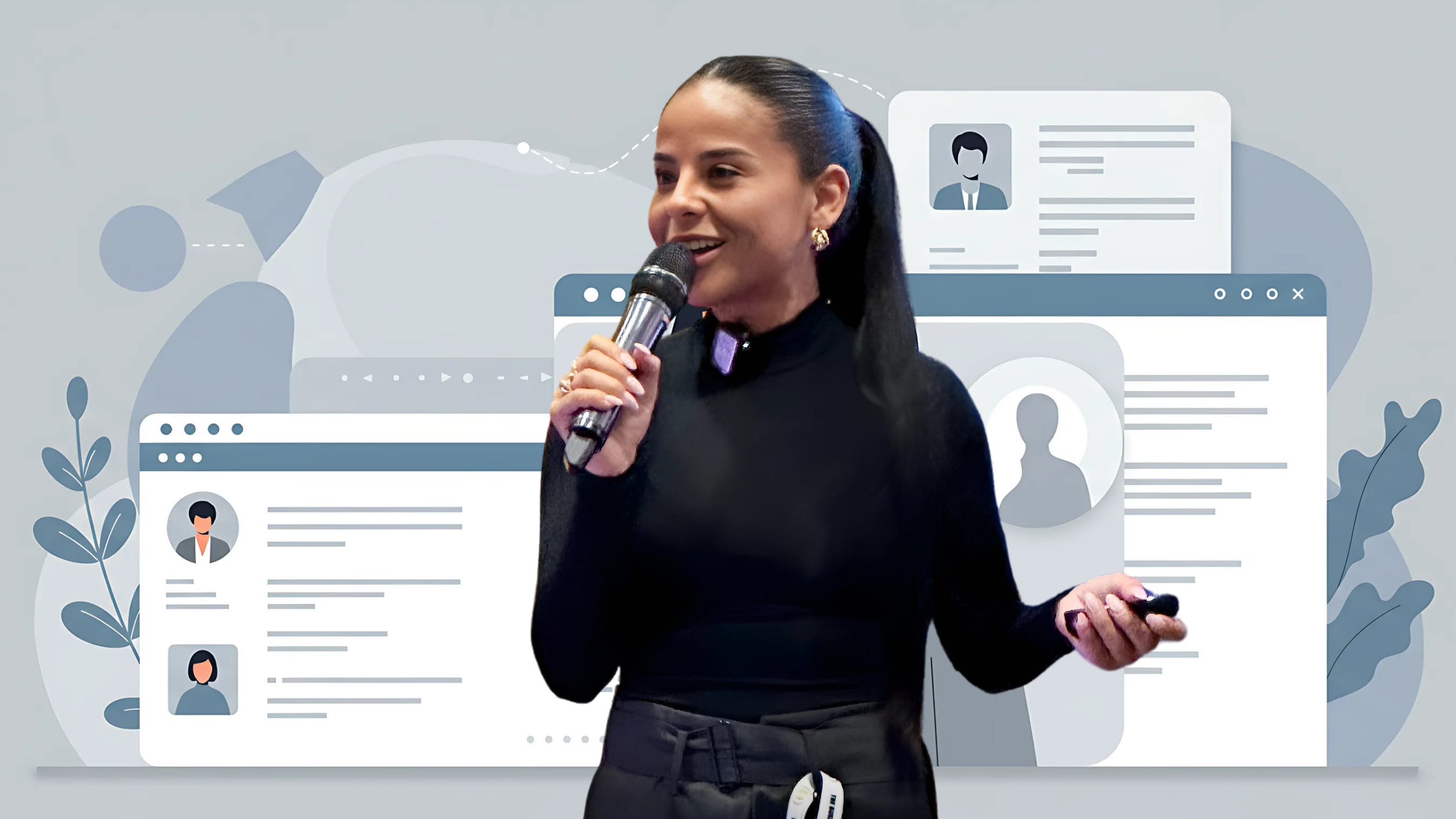
I first heard Lara explain it at The Business Show in London, after following her own rapid growth on LinkedIn. I also got the chance to ask her about what that growth had cost her personally, which led to a rather more revealing answer than the usual personal-branding advice.
The SLAY framework for LinkedIn
Lara simplifies content creation with her SLAY framework, which stands for:
S - Story
Start with something that actually happened to you. The story gives the post a point of view nobody else can copy.
L - Lesson
Work out what the experience taught you or changed about how you think. That gives the story a reason to exist beyond simply telling people what happened.
A - Actionable advice
Give the reader something they can use in their own work, rather than stopping at your experience.
Y - You
Turn the post towards the reader. Lara recommends ending with a question or call to action that gives people a natural reason to join the conversation.
How to use the SLAY framework in a LinkedIn post
The point is to give the post a shape: start with something that happened, work out what it taught you, give the reader something useful, then bring them into the conversation.
Here’s a worked example of how the SLAY framework can look in a LinkedIn post:
I once lost a piece of work because my proposal was too clever.
I’d spent ages making it look polished and explaining everything we could do. When I eventually asked why they’d gone elsewhere, the answer was much simpler than I expected: they weren’t completely sure what they were buying.
I’ve thought about that answer a lot since. When you know your own business inside out, it’s very easy to mistake detail for clarity. The person reading your proposal doesn’t have all the context you have in your head.
Now, before I send anything important, I read it once from the perspective of someone who knows almost nothing about the business. If the offer isn’t obvious without me there to explain it, I keep editing.
What’s something in your business that became much simpler once you looked at it from the customer’s side?
Here’s the SLAY structure underneath it:
Story: losing the work because the proposal was unclear.
Lesson: knowing your business too well can make your explanation harder to understand.
Actionable advice: reread important sales material as someone without your existing context.
You: invite the reader to think about where they’ve had the same experience.

10 tips for personal branding on LinkedIn
Lara also shared some more interesting tips to keep in mind if you want to improve your personal branding on LinkedIn (and elsewhere):
1️⃣ Consistency is key
Lara recommended posting three to five times a week when she gave this talk. It’s about finding a rhythm you can sustain long enough to learn what people actually respond to.
2️⃣ Focus on engagement over tools
Instead of obsessing over analytics and automation tools, concentrate on creating content that people enjoy.
3️⃣ Build genuine connections
Expand your network by sending personalised connection requests and engaging with others’ posts. Real connections amplify your reach.
4️⃣ Leverage social proof
Display your achievements, features, and experiences prominently on your profile to build trust and credibility.
5️⃣ Give before you receive
Provide value to your audience without immediately seeking something in return. Focus on what they can gain from your content.
6️⃣ Adapt and iterate
Pay attention to what content performs well and be willing to adjust your strategy accordingly.
7️⃣ Optimise engagement early
Lara also paid close attention to the period after publishing, replying to comments and staying involved in the conversation around the post. I’d treat that as a useful habit rather than assuming there’s a magic first-hour algorithm boost.
8️⃣ Engage authentically
Beyond just posting content, engage with others by commenting on their posts and participating in discussions. This reciprocity encourages others to engage with your content as well.
9️⃣ Video content is rising
Lara was already paying attention to LinkedIn’s growing use of video when she gave this talk. It’s worth testing when the idea suits the format, rather than adding video simply because the platform happens to be giving it more attention.
🔟 Learn from competitors
Lara mentioned commenting on competitors’ posts to connect with their audience, turning potential competition into an opportunity for growth.


The sacrifices behind Lara’s success
If you’ve listened to the Millennial Masters podcast, you’ll know I often ask guests what they’ve had to sacrifice to get where they are.
Lara wasn’t on the podcast that day, but after her talk I managed to get the final audience question and asked her anyway. Her answer was considerably more candid than the usual advice about building a personal brand.
“I made many sacrifices. I was at university when I was building my personal brand and I did this thing called monk mode. I locked myself in Exeter.
I don’t think any of my classmates ever knew who I was. I didn’t have any friends. I didn’t have any social life.
I didn’t even see my family much. I was in and out of lectures. I was in my room most of the time, so I neglected a very big part of my university experience to get to where I am today.
Do I regret it? Absolutely not. It was so well worth it, because now I have the time to spend with the people I care about.
But people think that content creation, building a personal brand and running a business is easy — it’s not.
I’ve made a lot of sacrifices. I don’t really travel that much; the main reason I travel is for work.
I love thinking about work, I’m a workaholic, and I love being on LinkedIn and other platforms for eight hours a day.
So, it’s a sacrifice, but it’s so worth it because I get to meet people like you (😎). So thanks so much for following me; it means a lot.”
The short version
SLAY stands for Story, Lesson, Actionable advice and You.
Lara Acosta’s idea is that a LinkedIn post works better when it begins with lived experience and earns its way towards something useful for the reader. The framework gives the post shape, but you shouldn’t be able to see the scaffolding once it’s written.


