


The product was good enough for large companies, but the price made the business look smaller than it was.
Melissa Kwan had built eWebinar into a proven product. She called it ‘quite overbuilt’, yet the starting price was still $99.
Bigger companies saw that figure and questioned whether the company was serious enough to support them.
“Our starting point is still $99. But there are big companies that look at us and think we’re not serious enough,” she said.
“People look at the pricing and they think we’re a tiny company. So it doesn’t inspire confidence. We’re not an expensive bottle of wine.”
For larger buyers, it introduced doubt before they had enough evidence to judge it.
That makes underpricing more than a margin problem. The number helps buyers decide what kind of company they’re dealing with before they’ve seen much else.
Choosing a lower figure because it feels safer can make the actual buyer you want more cautious. 👇🏻
New here? Millennial Masters shares practical lessons from founders on building better companies and handling the parts of the job nobody prepares you for. Subscribe for honest ideas on growth, AI, leadership and the decisions that shape your business.


Price becomes part of the evidence
Before buying, customers rarely know enough to judge a company properly.
They can’t see the systems behind the product or the problems the team has solved, so they judge what they can see.
An unusually low figure can make a larger customer question whether the business is established enough to support them. They may never say why and simply decide the business isn’t ready for them.
A deliberately low-cost company can work when the whole business is built for that position.
eWebinar had outgrown its price.
The number was still sending an earlier version of the company into the market, making the business look less capable than it was.
The wrong customers arrived
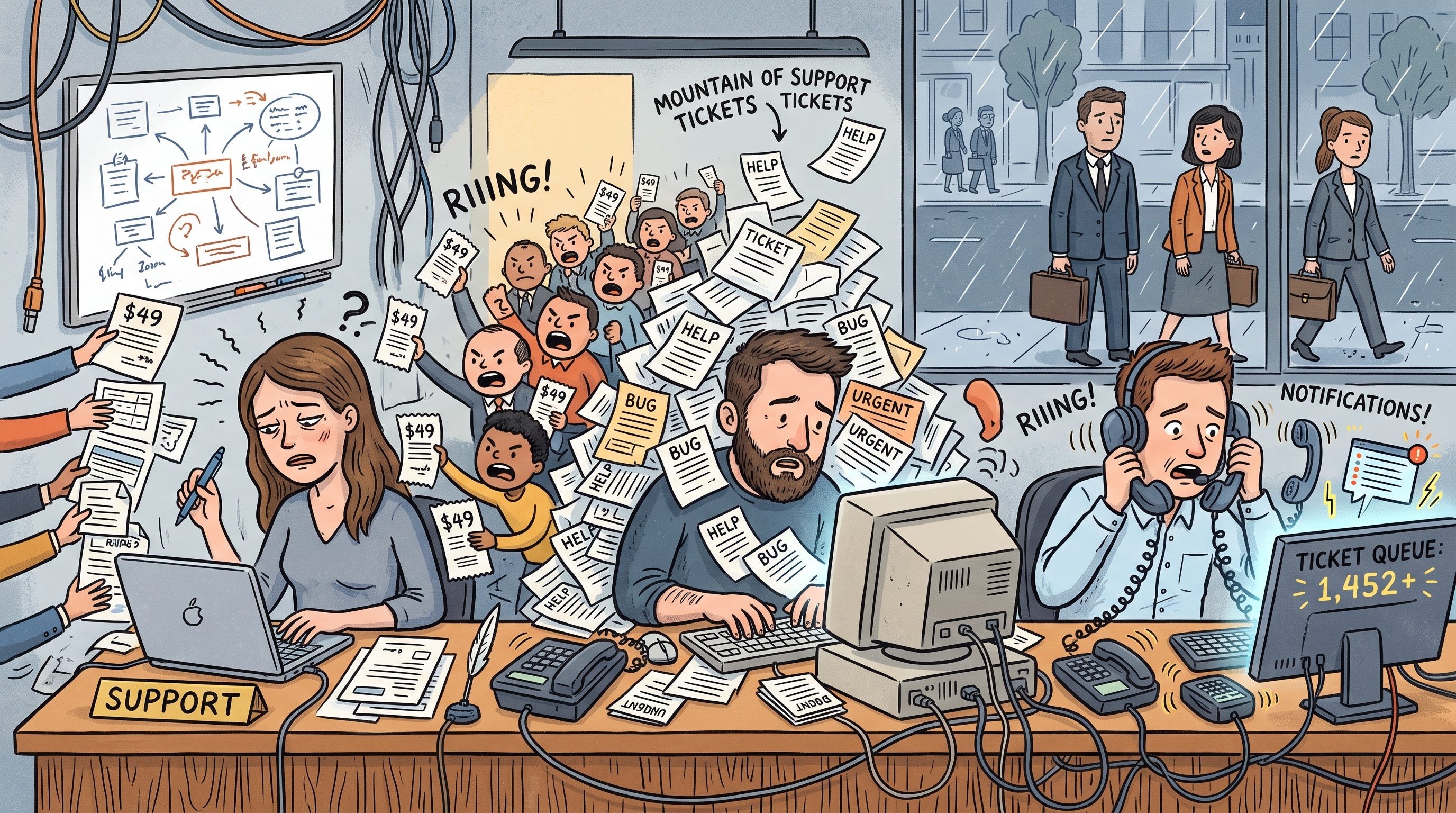
Melissa kept hearing the same explanation: ‘We signed up because you were the cheapest.’ The product was worth far more than the price suggested.
Many lacked a clear need for the product. Some had signed up without understanding how it fitted their company, then struggled to use it and left within weeks.
“They want everything and then they can’t afford $49,” Melissa said. “Within two weeks, they churn.”
The low price brought in customers with little reason to stay.
Melissa, David and their chief operating officer were handling support themselves because the company couldn’t yet hire a support team.
“It was drowning our support,” Melissa said. “It was a huge distraction for David because then he couldn’t code.”
The price was now deciding how the founders spent their time.
When eWebinar doubled its starting price to $99, Melissa said the low-value support burden disappeared almost immediately.
The new price filtered out buyers who were unlikely to use the product properly.
The cheapest customer can become the most expensive one to keep.
Brad Mac saw the same pattern with discounts. A 50% discount can make the ads look healthier on paper and pull in impulse buyers who disappear fast.
Paying less to win a customer means little when they buy once or create more work than the sale pays for. Those tidy numbers can hide a worse customer mix.
The price follows the work inside
The pricing model gets tested when the work gets faster.
Better processes shorten delivery. AI is speeding that up even more. Where that gain ends up depends on how you charge.
Joy Zarine saw the problem in time-based pricing. “Being better at your job when you charge time for money actually means that you’re faster, you’re more efficient and you earn less,” she said.
The customer gets the benefit of that experience. Charging by time means faster delivery reduces the bill, even when the result hasn’t become less valuable.
Luke Tobin saw AI making this more urgent. “The efficiency gains allow the consultant or the team to do more work,” he said.
“It doesn’t mean that they should be paid less for that work because they’re just able to do more in the time that they have.”
Ask who benefits when the work gets faster. A weak pricing model can turn better work into a smaller invoice.
Price isn’t always the problem
Raising the price works when the market can carry it. It won’t fix every business.
Noel Andrews ran into that with an interview coaching company. “When people did pay, they got tremendous value,” he said.
“But getting people to pay a reasonable amount of money, I don’t think there’s almost anything I could have done to the offer. I think it was just a market problem for me there.”
The service worked. The market didn’t.
A low price doesn’t always reflect weak confidence or poor judgement. Sometimes customers simply won’t pay enough to cover what the service costs to deliver.
A price increase can’t repair a market that won’t support the business. Changing the number can make the real problem harder to see.
What kind of business is the price creating?
The price you choose keeps shaping the business long after launch. It affects who comes in and how much work those customers create.
It decides who you serve and who benefits when the work gets better. Sometimes the number exposes a market that can’t support the company at all.
Being inexpensive can work when the whole business is designed for those customers. Underpricing can pull the business into a shape that makes it weaker.
Before lowering the price to win another customer, ask what that number will bring into the business. If it isn’t working, ask what it’s already changing.
What kind of business is that number quietly building around you?


Finding the right fit often creates a healthier business than simply attracting more buyers.
It shapes perception, expectations, and the type of relationship you build with customers before the first conversation even starts.