



You’ve made sure enough money came in this month. Maybe even a little more than expected. Then a tax bill arrives, or a client who always paid on time suddenly doesn’t.
The money still has to come from somewhere. You take out credit, delay something else or, as I’ve done before, reach into your own savings to cover the gap.
The bigger the business, the more money you have to find. Getting caught once is painful. When it happens again, you can end up frighteningly close to the edge. I’ve been there too.
Nadia Codreanu, the CFO behind The Profit Lens, has seen this pattern up close before. In her first Millennial Masters guest piece, she looked at the cuts that save money now and cause damage later.
This time, she explains which warning signs appear first and the five numbers worth checking every month.👇🏻
New here? Millennial Masters shares practical lessons from founders on building better companies and handling the parts of the job nobody prepares you for. Subscribe for honest ideas on growth, AI, leadership and the decisions that shape your business.

The warning comes before the balance
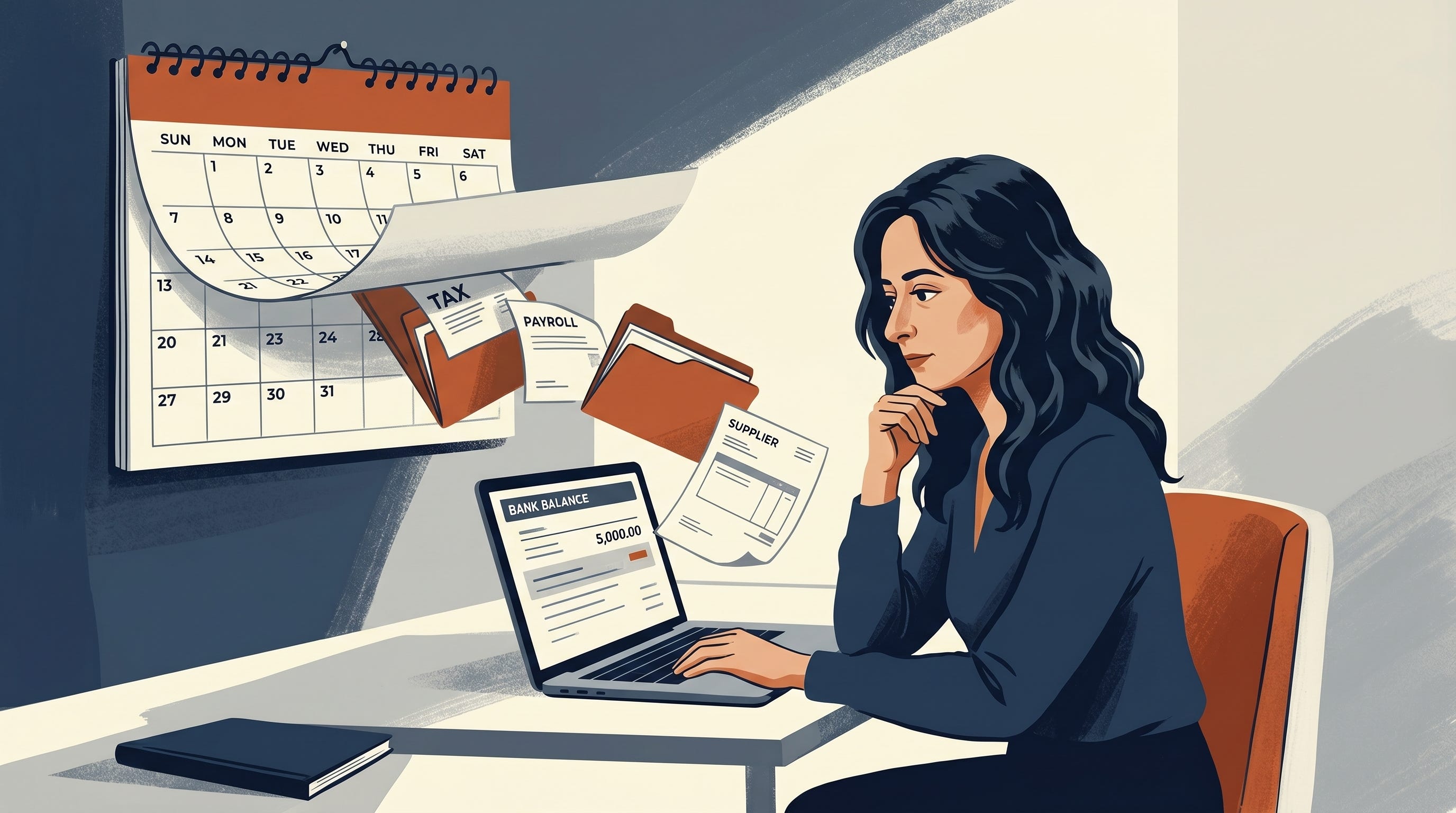
You watch the bank balance for signs of trouble. By the time it starts looking uncomfortable, the cause may already be several weeks old.
Profit has weakened, invoices have gone out late or clients have quietly stretched their payment terms.
The balance still matters. It tells you what has already happened. The useful warning signs appear earlier.
Early signs you notice too late
One of the first numbers I watch is monthly profit. When it falls below 5% and keeps moving towards breakeven, cash pressure may already be building.
You can miss the change when profit isn’t reviewed monthly. Revenue and the bank balance get more attention, while the full numbers may only appear at quarter end. By then, the cash impact can already be several weeks old.
Profit erosion is only one signal.
🧾 The invoice hasn’t gone out
A project is completed and nobody chases the paperwork. Every day between delivery and invoicing adds another day to the wait.
⏳ The client keeps stretching payment
A client who used to pay in 30 days starts paying in 45, then 60. Nobody renegotiated, but the gap between delivery and collection widened.
🤝 Work started before the money was agreed
Work starts on a handshake and the contract follows later. The delivery costs are already real, while the cash protection remains uncertain.
A full pipeline can still hide a cash problem when the money arrives too late. A healthy revenue forecast doesn’t mean cash will arrive when you need it.
I’ve seen businesses with money in the bank discover that very little of it was genuinely available once the payments arrived and the invoices were still outstanding, while the profit had been eroding for longer than anyone had noticed.
A monthly review catches these changes while there’s still time to respond.
Five numbers to check every month
These are the five checks I use when cash feels tight. Together, they show what your bank balance leaves out and where it may be heading next.
1️⃣ Cash left after commitments
The bank balance becomes more useful once you understand what’s already committed against it.
List every payment due in the next 30 days, including salaries, rent, supplier invoices, contractor payments and tax obligations. Subtract that total from the balance.
What remains is the cash you can genuinely use.
2️⃣ One month of outgoings
Calculate the total cash that must leave the business each month, including fixed and variable costs.
This tells you how much runway you have if revenue slows and whether the balance is healthy or temporarily inflated.
3️⃣ Profit this month
Is your business profitable right now, and at what level?
Profit below 5% and moving towards breakeven is one of the clearest signs that cash pressure may be building. Catching it here gives you more options than waiting for the balance to fall.
4️⃣ Overdue client payments
Open your receivables and focus on what should already have arrived.
Overdue receivables are cash the business has earned but hasn’t collected. Following them up promptly is often the fastest way to improve the cash position without cutting costs.
5️⃣ Tax due in the next 90 days
Corporation or income tax, VAT or sales tax, and payroll taxes accumulate quietly before arriving on fixed dates.
Map every tax payment due in the next 90 days before deciding how much cash you genuinely have available.
Growth widens the cash gap
Your business needs working capital to cover suppliers, salaries and delivery costs before clients pay.
The cycle is healthier when client money arrives early enough to cover the costs of delivery. When it doesn’t, the business has to fund the gap from somewhere else.
Payment terms are a common cause. Clients may pay in 60 or 90 days while suppliers are due in 30. You deliver the work, cover the costs and then wait.
Growth increases the pressure because a business growing quickly needs more working capital. Extra cash may be required simply to fund delivery while the company waits to be paid.
The business model needs to account for that gap. Client payment terms should support the cost of delivery, margins must leave enough cash inside the company, and owner withdrawals can’t drain the capital required to keep operating.
Why you keep putting it off
You’re busy selling, delivering and managing everything else. Cash checks can feel like a finance task to revisit when there’s more time. That moment usually arrives when the bank balance forces it.
You may hesitate to chase a client because the relationship feels more important than the invoice. Growth can also feel like the answer to the timing problem.
Growth may bring in more cash later, but the bills due this month still need paying. Slow-paying clients rarely speed up because you need the money, and a margin that weakened over six months won’t recover immediately.
Reviewing these numbers every month gives you a better chance of finding the problem while it’s still manageable.
Check before the balance forces you
Review profit, committed payments, overdue invoices and tax obligations every month.
The bank balance can tell you that cash is tight. These numbers can tell you why, while you still have time to do something about it.
👤 Nadia Codreanu is a CFO with 20 years’ experience across corporate and founder-owned businesses. She writes at The Profit Lens about financial clarity, leadership under pressure, and the decisions that matter most for professional services founders. Connect with Nadia on LinkedIn.



Really useful piece. The bank balance is often treated as the warning system, but by the time it looks wrong, the real problem has usually been building elsewhere for weeks. I like the focus on earlier signals – profit erosion, late invoicing, and stretched payment terms – because those are the places where a business can still act before cash becomes the crisis.
Revenue hides a lot of sins until a major client pays 30 days late and you suddenly realize you can't cover payroll without dipping into personal savings. It's an incredibly stressful lesson to learn the hard way, but almost every founder goes through it at least once.