



AI slop is flooding everything, and it’s getting boring fast.
LinkedIn is the worst for it. You’ll see a “thought leadership” post that says absolutely nothing, then 50 comments underneath acting like it changed their life… and they all end with a question, funnily enough.
Substack Notes has plenty of it too, and X is basically a stream of recycled takes with new fonts. It’s as if everyone is using the same AI growth and engagement tools, which they likely do. Whole feeds are turning into churned AI output, and half the time it reads like bots replying to bots.
YouTube and TikTok creators have caught the same bug, you can hear it in the scripts now. A real person on camera, reading lines that sound like they came straight out of a prompt and nobody edited them.
What’s broken here isn’t the tech, because this isn’t an anti-AI rant.
I use AI every day across multiple tasks. It’s the missing judgement.
People outsource the moment where they’re meant to decide what they think. The result looks polished and still feels empty, because nobody made an actual point.
I’ve already written about the telltale ChatGPT voice and how to clean it up. This guest piece takes the next step.
I asked Dr Sam Illingworth from the Slow AI newsletter to lay out a practical framework for bringing judgement back into the process, so your writing has a spine and your comments sound like you actually read the post.
Here’s Sam’s framework, with the gloves off:👇🏻
New here? Millennial Masters shares practical lessons from founders on building better companies and handling the parts of the job nobody prepares you for. Subscribe for honest ideas on growth, AI, leadership and the decisions that shape your business.

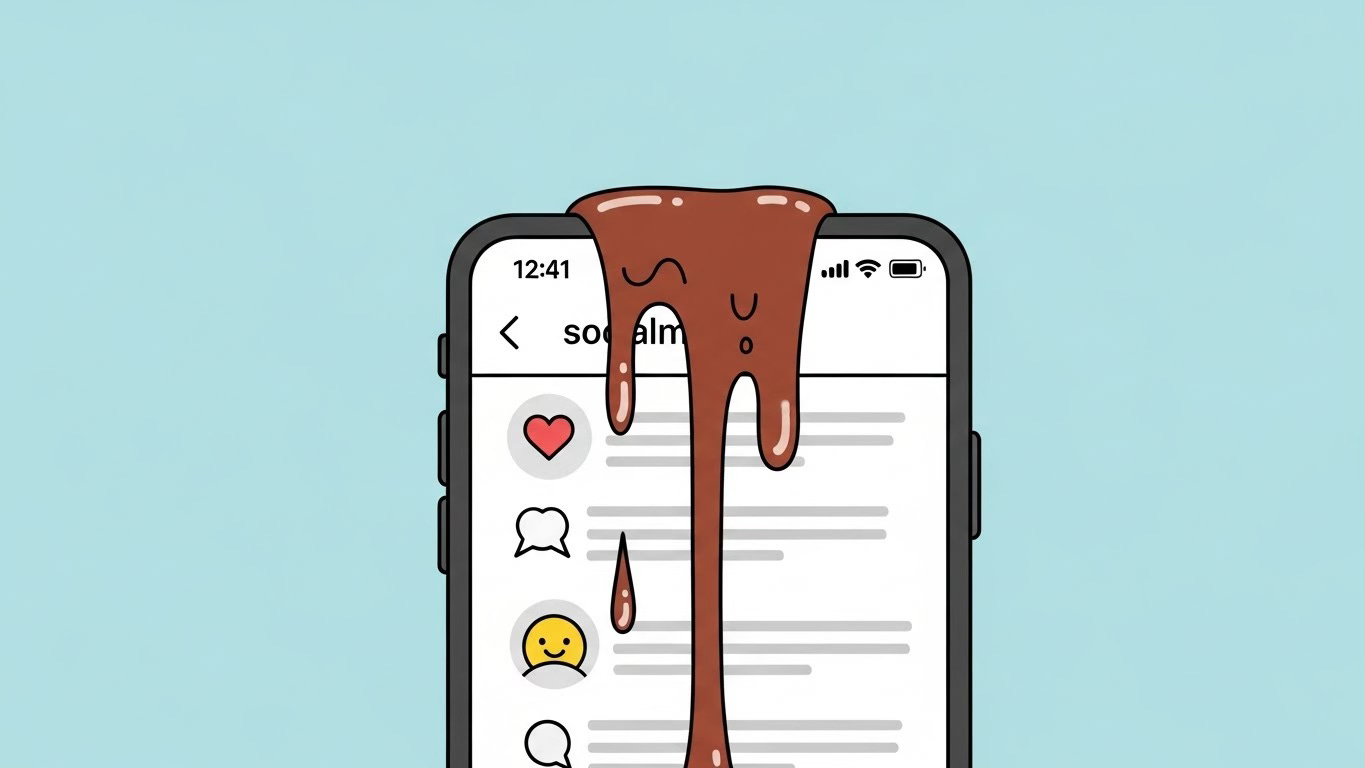
Why everything reads the same now
Authenticity now depends on judgement. Without it, you’re just filling space.
In 2026, text is basically free to produce, so the feeds are saturated.
You see confident writing with nobody behind it, and you can feel the missing judgement.
Bad AI writing is easy to spot and easy to fix. Slop looks fine on the surface, and it still carries no decision or ownership.
We are supposed to be the point at which judgement enters the system. When we delegate that role away, the result is unforgivable.
When publishing gets too easy
The issue is what happens when publishing stops requiring a choice.
When words arrive instantly, it becomes easy to publish without deciding whether something should exist at all.
Drafts appear finished before anyone has asked what they are for or who they are for. Voice flattens because nothing has been weighed.
This is slop because no one stood behind it. You give up your voice when you stop stepping in.
Write where you have to make a call
Write the first draft on your own. Keep AI out until the point is clear.
This is where judgement begins. The draft can be rough. It needs a point of view, a clear decision about what matters, and a sense of what you’re risking by saying it.
If the draft feels a bit exposed, that’s usually a sign you’ve made a real call.
Bring AI in after that. Use it to edit the work, not to write it for you.
Use AI as pressure to stress-test the argument, spot what you’re avoiding, and see what you’d actually stand behind under pushback.
If AI makes the decision for you, the work is already lost.
Keep AI in its place
AI is useful when it is clearly not in charge.
Used well, AI supports the thinking and stays out of the driving seat.
Use it for three jobs:
First, challenge. Ask it to identify where your reasoning breaks under scrutiny.
Second, exposure. Ask it which sentences signal safety rather than intent.
Third, context. Ask it for cases that complicate your position rather than flatter it.
You’re still responsible for what stays in. That’s the job.
Comments are judgement in public
The same rule applies in the comments.
Generic comments are everywhere, and they read like drive-by approval from people who didn’t read the post.
A good response takes a position and adds something real to the thread, whether that’s a challenge, a useful detail, or a sharper question.
If you’re not willing to use judgement, don’t comment. Silence beats auto-agreeing.
A Slow AI prompt
Use this prompt in your AI tool of choice after you have written a full first draft.
That draft might be a mission statement, a strategy note, a report, or an email you are about to send.
The purpose is to force judgement back into the process.
You are a founder reviewing a first draft. Your task is to interrogate the judgement behind the text, not its writing quality. Write this for a sceptical peer audience. Use a tone that is critical and unsparing.
Read this draft and produce the following: identify the three places where judgement is weakest or most deferred, explain what decision is being avoided in each case and why that matters, and highlight any sentence that reads as publication without ownership.
If the response creates hesitation or discomfort, that is the point.
Judgement is the job
AI slop comes from people giving up agency, then publishing anyway.
You exist to make calls on what gets said and what stays unsaid.
When that responsibility gets handed over, the result can read well and still carry no weight.
Slow AI means you don’t outsource judgement. AI can help you test your thinking, then you decide what stays. The aim is publishing with ownership.
AI can help you think. Responsibility stays with you.
Write as someone who is prepared to stand behind every sentence.
👤 Sam Illingworth is a Professor of Creative Pedagogies at Edinburgh Napier University. His work uses poetry and games to spark dialogue between scientists, technologists, and the public. He also writes Slow AI, a newsletter that pushes back against urgency and hype in tech. It’s a call to build systems that reflect us carefully, ethically, and on human terms.


Love this line: “If you’re not willing to use judgement, don’t comment. Silence beats auto-agreeing”
Thanks for the follow bthw. Should immediately update my meeting slides title to "Knowing when to leave it the heck alone.-Sam IIlingworth"