


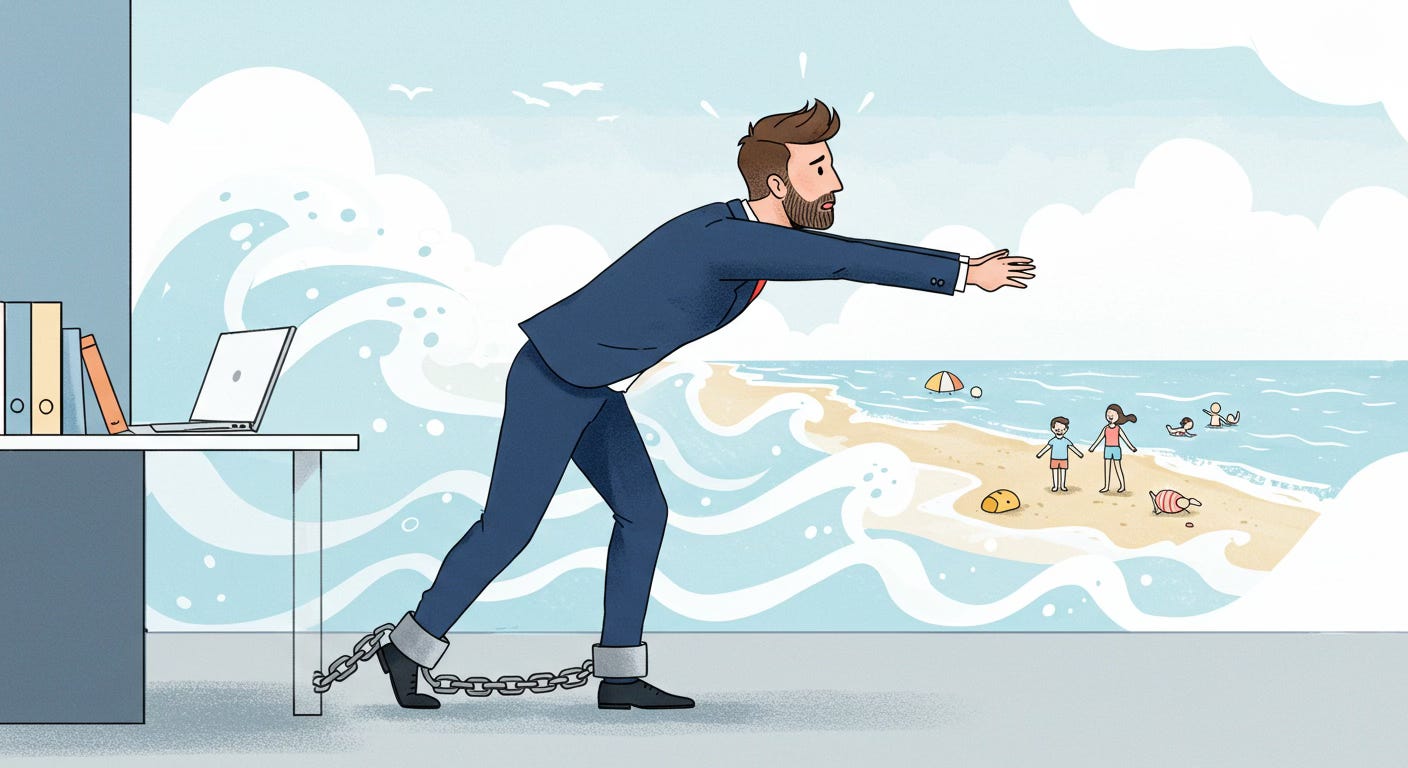
For 15 years, I barely took holidays. My phone was never off, my inbox was always open, and I never set an out-of-office reply. If I stepped away, even for a day, I thought the whole thing might start falling apart.
I told myself that’s what commitment looked like. What I’d really built was a business that still depended too heavily on me.
You can build a business like that without meaning to. It’s a trap that keeps coming up in Millennial Masters conversations.
Getting out of it means changing how the business runs when you’re not there. That takes delegation, better systems, clearer ownership, or just being honest about what still depends on you.
Because if you can’t step away, the business runs you, not the other way round.
That’s the problem this piece gets into. 👇🏻
What holding on is costing you
You can think you’re building a business and still end up with something that cannot run without you.
Tricia Sciortino (CEO of BELAY) nailed it: “If your revenue only grows when you work harder, you haven’t built a business. You’ve built a job. One with long hours. No benefits. No breaks.”
You think it’s faster to “just do it yourself.” But how many hours do you waste on tasks worth a tenth of your real rate?
That gap costs more than money. It pulls your attention away from the work that matters, and if you leave it alone long enough it catches up with you in the business and in your health.
Tricia’s list of control freakism beliefs reads like a confessional:
“I can do it better.”
“No one wants to do this either.”
“If I want something done right, I must do it myself.”
“Never ask someone to do something you’ve never done yourself.”
None of that is a real strategy. It’s what work starts sounding like when control has gone too far. Leave it alone and it will hold the business back.
When you’re forced to step back
Millennial Master Gemma Price didn’t get a choice: she had to disappear for a week when her baby was born.
“I have a one-year-old, so I have a very young baby… I had to take a break from the business, which is a scary prospect. And for a week, I had no choice because I had a baby and I was in the hospital for the first week.
“I’ve got an amazing team… I would not be able to do what I do now without them. And they rallied around, they sorted everything. In fact, performance was up in some areas, so maybe I’ll do it more often. But not have more children, take more breaks.”
She’s clear that HubGem has to be bigger than her. That is the only way it keeps running when she is not there.
Burnout isn’t a badge
Millennial Master Mike Jones knows what happens when you don’t stop. He tried to outwork the pain: “I used to justify to myself that if I just work more and more and more and more, then I’ll be more and more successful.
“What actually happened was that business, which was supposed to give me freedom and lifestyle and fulfilment, was draining me and making me feel miserable… if you’re constantly living with your business on your mind, then you’re just going to have severe burnout or poor health.”
He is blunt about the whole “no success without sacrifice” line. He thinks it is toxic.
Get out of the middle
Millennial Master Will Polston built his boundaries with ruthless intent: “I aim to spend a minimum of 90% of my working week coaching, creating content, building relationships… anything else, I don’t want to do.”
He wants to spend more of his time on the work he does best and much less on the work that drains him.
Tricia breaks it down into a 90-day delegation playbook:
Weeks 1-2: Track everything you do.
Weeks 3-4: Run each task through the ROI filter. If it’s not worth your rate, delegate it.
Weeks 5-8: Document as you go. Don’t make it perfect: just record, hand off, and improve on the fly.
Weeks 9-12: Transfer ownership. Don’t just delegate tasks, delegate outcomes.
A better test is whether the business can keep moving without dragging you back into everything.
Can you take a holiday without your inbox eating you alive? Can your team make decisions without you? Are you doing what gives you energy?
Build something that can run without you
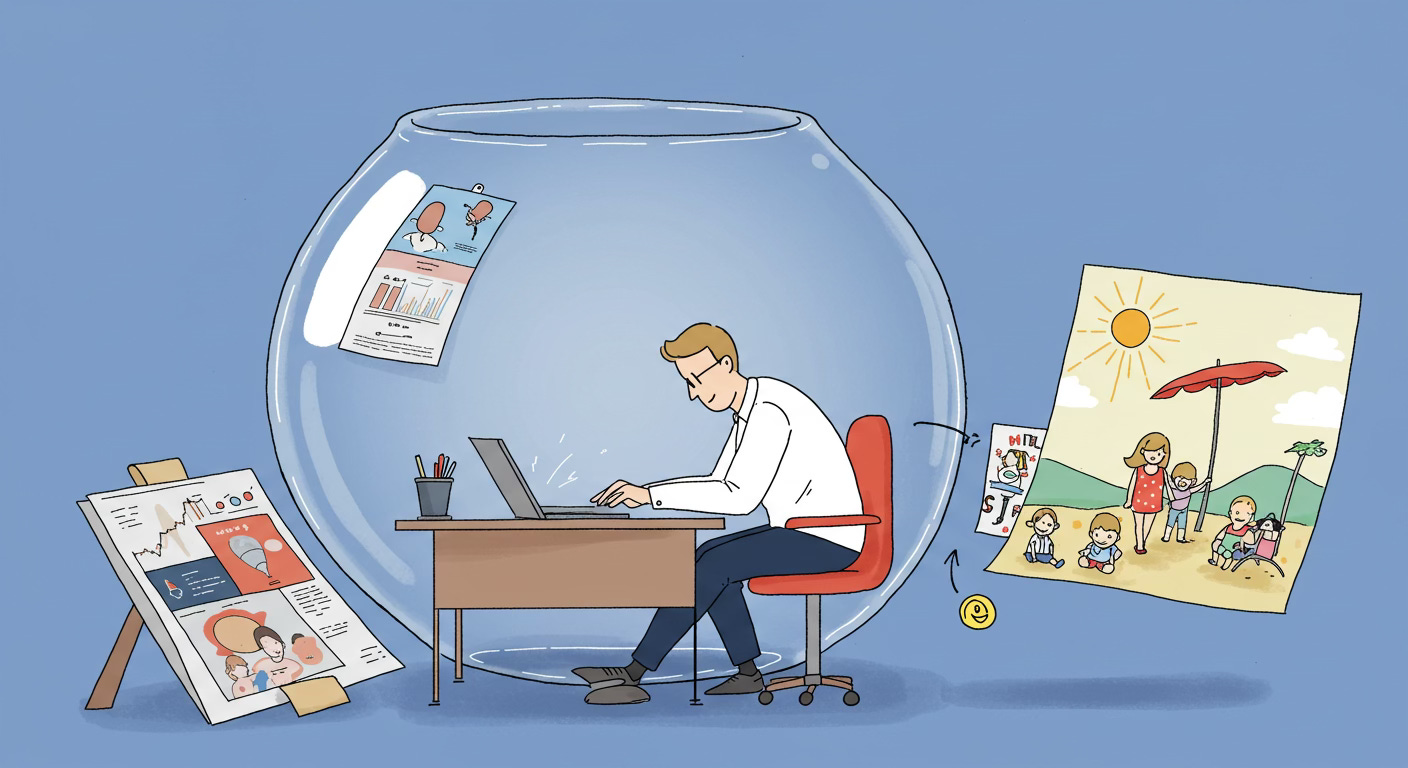
How you build the business shapes what it starts asking from you. This is still fixable.
If you want the business to cope without you, start putting better systems and clearer ownership in place now, not later.
If you’ve just brought someone in, start documenting earlier, hand over smaller things first, and let them build from there.
Still solo? Block one hour a week where you’re unreachable, just to prove the world doesn’t end.
If the business still falls apart when you step away, too much is still resting on you.


Where I am right now, it feels too soon to start talking about freedom but after reading this, I'm more aware that that's just creating another job for myself. I will take the advice and start working towards it
A hostage to the opportunity.... 😕 So common