You can easily sink a lot of money and time into a rebrand, especially with an agency, only to find months later that it hasn’t fixed the sales problem you started with.
If the cause sits somewhere else in the customer journey, that problem keeps costing you while you’re busy changing the brand.
Brigitte Knight writes Brandemonium, a newsletter for small business owners doing much of their own branding and marketing. She started her career as a designer and has spent much of it since managing creatives.
That’s why I asked her to write about how to tell whether your branding is really the problem, and where to look when it isn’t. 👇🏻
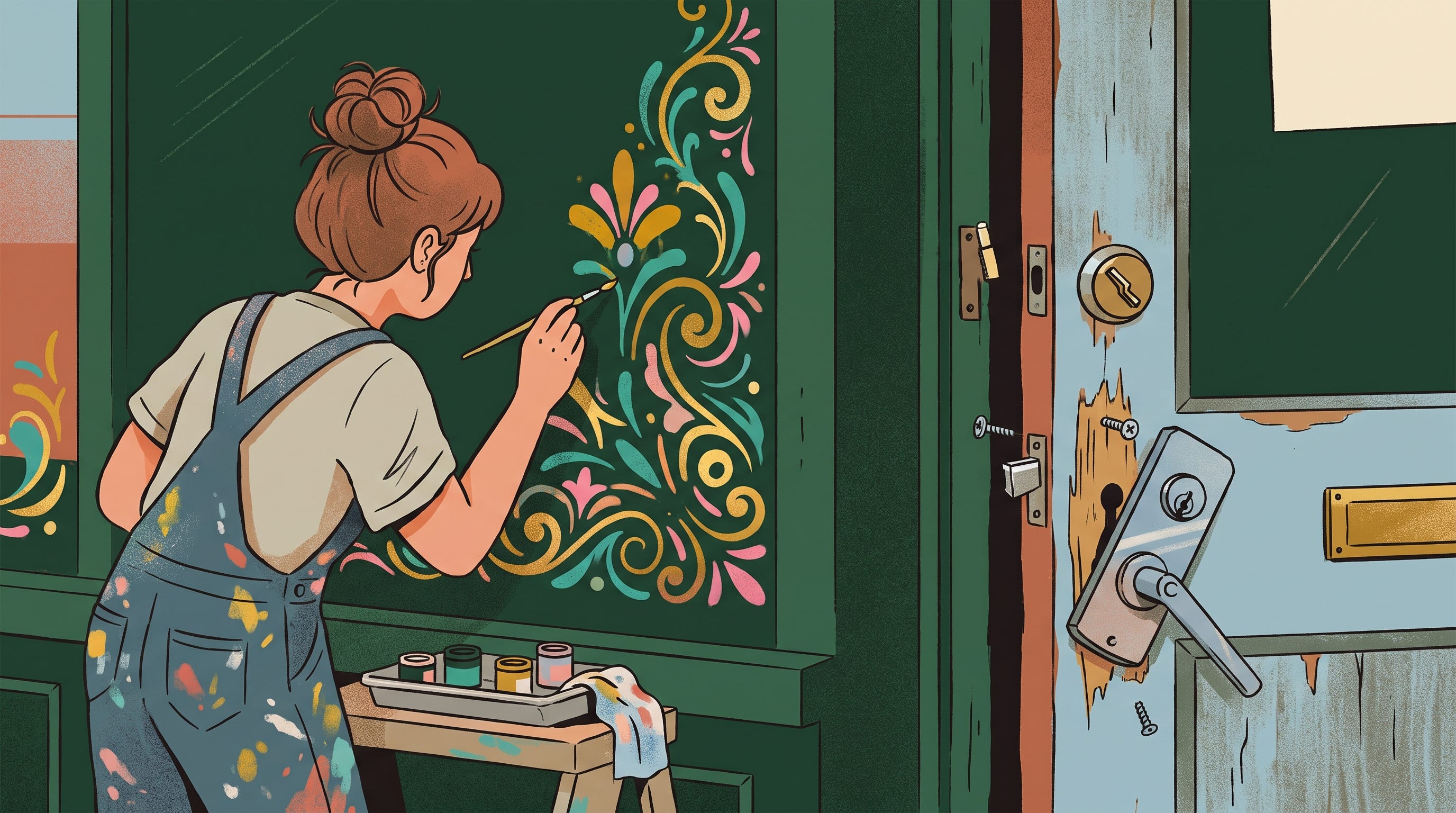
I once worked with a dental clinic whose branding was stunning. It had recently rebranded, and the business was spending heavily on acquisition, yet too many people who showed interest weren't becoming patients.
Once we looked at the journey, the booking process stood out. The website sent patients who wanted to book into a self-service system. Before that, a prospective patient could speak to someone, ask questions, feel reassured and then pay the deposit.
The new flow replaced that conversation with a lot of clicking and poor navigation. If someone gave up and phoned instead, the receptionist was often tied up with other duties or off that day. Some left messages. By the time the clinic called back, people often didn't answer.
Visiting the dentist requires enough self-motivation anyway. The team later improved the booking flow and its connection with the clinic's practice-management system. The branding looked excellent. The booking problem still needed its own fix.
Why the rebrand gets blamed
When growth stalls and sales are down, the logo, colours, website and ads are easy places to look because they're visible. It's understandable. When you're looking for a problem to solve, the visible parts of the business are the easiest to blame.
A rebrand also feels like action, and it's a fun process. I started my career as a designer and have spent most of it since managing creatives, so I'm probably the last person you'd expect to talk you out of one. It's easy to assume a big change will have a big impact before you've properly found the cause.
Branding has its strongest influence while somebody is forming a first impression and working out whether they recognise you, understand the offer, trust it and feel it's for them. It can help people notice you and set expectations about what they're buying. Those first impressions have a job to do. They can't explain every failure that appears later in the journey.
If existing customers aren't returning, checkout keeps failing, deliveries go wrong or people abandon a booking flow after deciding they want to buy, the cause deserves a closer look before you commission a new identity.
Subscribe to Millennial Masters for useful ideas each week on building and running a modern business 📧

Is branding actually the problem?
Before commissioning a rebrand, check whether the failure really sits in the identity or promise. I use four simple tests:
1️⃣ Timing • Does the problem appear after first purchase, among people who already know the business?
2️⃣ Dimension • Is the shortfall about reliability, speed, care or the product itself?
3️⃣ Location • Is the problem confined to one channel, product, team or site while the identity stays the same elsewhere?
4️⃣ Promise • Does the look accurately represent the offer, while customers still leave disappointed?
If those checks point elsewhere, follow the customer journey before changing the brand.
Find the break point
Point your hunt for the real cause of the sales issue in the right direction with this framework. I use a simple symptom-to-cause trace, drawing on SERVQUAL, Strategy Maps and AARRR. 👇🏻
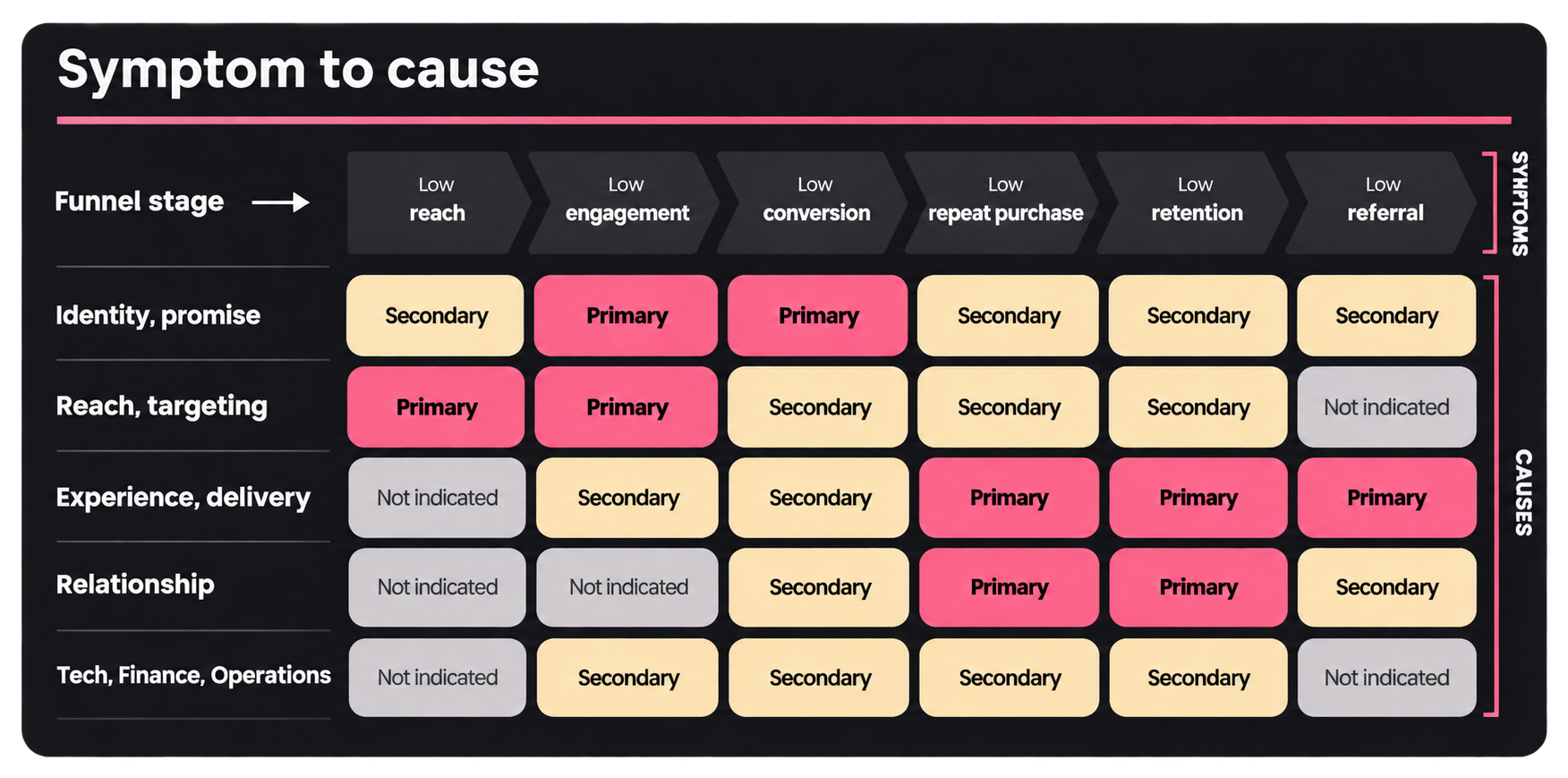
Start with the exact place where people stop moving forward. That might be being found, understanding the offer, making an enquiry, completing a first purchase, returning or referring somebody else. "Sales are down" can hide very different problems.
Then ask what stopped them at that point. People who never see you point towards a reach problem. Someone who arrives but can't understand the offer gives you somewhere different to look: the message and positioning. A long form or broken checkout puts the problem inside the buying experience. When buyers disappear after purchase, look at delivery and follow-up.
The offer itself may be weak, or a system behind the scenes may be creating the failure. Keep tracing until you reach something you can actually change.
In the dental-clinic case, the visible symptom was weak booking performance. The booking journey asked people making a high-value cosmetic decision to pay a deposit without the reassurance they once got from a person. The booking flow added friction at exactly the point where trust mattered.
Fix one cause at a time
Once you have a shortlist of plausible causes, start with the easiest useful fix and measure again at the same point where the symptom appeared. Changing several parts of the journey at once makes it much harder to tell what worked.
The trace may expose a much smaller repair: improving the UX, rewriting product descriptions, tightening delivery or giving customer-facing staff clearer brand guidance. Those changes are easier to test before you commit months and a large budget to a full rebrand.
A rebrand makes sense once you've traced the problem back to the brand itself. If you skip that diagnosis, you risk paying for a new look sitting on top of an unchanged problem.
👤 Brigitte Knight is Brand & Communications Manager at HEVEN, with more than 20 years’ experience across brand strategy, creative direction and digital marketing. She also writes Brandemonium, covering practical brand work for small business owners. Connect with Brigitte on LinkedIn.